

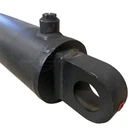

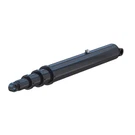


Hey there! As a supplier of telescopic cylinders, I often get asked about all sorts of technical details. One question that pops up quite a bit is, "What is the surface roughness of a telescopic cylinder?" Well, let's dive right into it.
First off, surface roughness is a big deal when it comes to telescopic cylinders. You see, a telescopic cylinder is made up of multiple stages that slide in and out of each other. This sliding action needs to be smooth and efficient, and that's where surface roughness plays a crucial role.
Surface roughness refers to the microscopic irregularities on the surface of the cylinder. These irregularities can be caused by a variety of factors, such as the manufacturing process, wear and tear over time, or even environmental factors. In simple terms, it's like the bumps and valleys on a road. If the road is too bumpy, it's going to be a rough ride, right? The same goes for telescopic cylinders.
When the surface roughness of a telescopic cylinder is too high, it can lead to a whole bunch of problems. For starters, it can increase friction between the different stages of the cylinder. This means that more energy is needed to extend and retract the cylinder, which can lead to higher operating costs. It can also cause premature wear and tear on the cylinder components, reducing the overall lifespan of the cylinder.


On the other hand, if the surface roughness is too low, it can also be a problem. A surface that is too smooth may not be able to hold lubricant effectively. Lubrication is essential for reducing friction and preventing wear in a telescopic cylinder. Without proper lubrication, the cylinder can overheat, and the metal surfaces can start to gall and seize up.
So, what's the ideal surface roughness for a telescopic cylinder? Well, it depends on a few factors, such as the type of application, the operating conditions, and the materials used. In general, a surface roughness in the range of 0.4 to 1.6 micrometers is considered good for most telescopic cylinder applications. However, for more demanding applications, such as those in high-pressure or high-speed environments, a lower surface roughness may be required.
As a supplier, we take surface roughness very seriously. We use advanced manufacturing techniques to ensure that the surface finish of our telescopic cylinders meets the highest standards. Our manufacturing process includes precision machining, grinding, and polishing to achieve the desired surface roughness. We also perform rigorous quality control checks to ensure that each cylinder meets our strict specifications.
Now, let's talk about the different types of telescopic cylinders we offer. We have Single Acting Telescopic Cylinders, which are designed to extend under hydraulic pressure and retract under the force of gravity or an external load. These cylinders are commonly used in applications where space is limited, such as dump trucks and agricultural equipment.
We also offer Replacement Telescopic Cylinders for those who need to replace a worn-out or damaged cylinder. Our replacement cylinders are designed to fit perfectly into existing systems, ensuring a hassle-free installation process. And if you're looking for a cylinder with multiple stages, we have Multistage Cylinders that can provide a long stroke in a compact design.
In addition to manufacturing high-quality telescopic cylinders, we also offer excellent customer service. Our team of experts is always on hand to answer any questions you may have about surface roughness or any other aspect of our products. We can also provide custom solutions to meet your specific requirements.
If you're in the market for a telescopic cylinder, whether it's for a new project or a replacement, we'd love to hear from you. We understand that choosing the right cylinder is crucial for the success of your application, and we're committed to helping you make the best decision. Contact us today to start a conversation about your telescopic cylinder needs. We're confident that we can provide you with a product that meets your expectations in terms of performance, reliability, and cost. So, don't hesitate to reach out and let's work together to find the perfect telescopic cylinder for you.
References
- "Hydraulic Cylinder Design and Application" by John O. Parry
- "Mechanical Engineering Design" by Joseph E. Shigley and Charles R. Mischke