




Are there any international standards for hydraulic tilt cylinders?
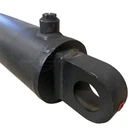
As a supplier of Hydraulic Tilt Cylinders, I often get asked about the existence of international standards for these essential components. Hydraulic tilt cylinders play a crucial role in various industries, from agriculture to construction, and having a clear understanding of the standards governing them is vital for both manufacturers and end - users.
The Need for Standards in Hydraulic Tilt Cylinders
Hydraulic tilt cylinders are used to provide controlled movement and force in applications where tilting or angling of equipment is required. For example, in agricultural machinery, they can be used to tilt plows or harrows to adjust the working angle. In construction equipment, they might be used to tilt buckets or booms.
Standards are necessary for several reasons. Firstly, they ensure the safety of the equipment and the operators. A well - designed and manufactured hydraulic tilt cylinder reduces the risk of failure, which could lead to accidents. Secondly, standards promote interoperability. When components adhere to a common set of rules, it becomes easier to replace or upgrade parts without major compatibility issues. Thirdly, they help in quality control. Manufacturers can use standards as a benchmark to ensure that their products meet a certain level of performance and durability.
Existing International Standards
There are indeed some international standards that apply to hydraulic cylinders in general, and some aspects of these can be relevant to hydraulic tilt cylinders.
One of the most well - known international standards organizations is the International Organization for Standardization (ISO). ISO has developed a series of standards related to hydraulic fluid power systems. For example, ISO 6020/1 and ISO 6020/2 specify the mounting dimensions of single - acting and double - acting hydraulic cylinders respectively. These standards are important as they ensure that the cylinders can be properly installed in different types of equipment.
ISO 3320 deals with the basic dimensions of hydraulic fluid power cylinders. It provides guidelines on the bore diameter, rod diameter, and stroke length, which are fundamental parameters that affect the performance of the cylinder.
Another important standard is ISO 4406, which focuses on the cleanliness of hydraulic fluids. Since the proper functioning of hydraulic tilt cylinders depends on the quality of the hydraulic fluid, maintaining the appropriate level of cleanliness is crucial. Contaminated fluid can cause wear and tear on the cylinder components, leading to reduced performance and premature failure.
Industry - Specific Standards
In addition to the general ISO standards, there are also industry - specific standards. In the agricultural sector, for instance, there are standards that take into account the unique requirements of agricultural machinery. The European Committee for Standardization (CEN) has developed standards for agricultural equipment, which can be relevant to hydraulic tilt cylinders used in this industry.
These standards may cover aspects such as the resistance to environmental factors like dust, dirt, and moisture, as agricultural equipment often operates in harsh conditions. They may also address the need for easy maintenance and repair, as farmers need to be able to quickly get their equipment back in working order.
Challenges in Applying Standards to Hydraulic Tilt Cylinders
While there are standards available, applying them to hydraulic tilt cylinders can present some challenges.
One of the main challenges is the wide variety of applications. Hydraulic tilt cylinders are used in many different types of equipment, each with its own specific requirements. For example, a hydraulic tilt cylinder used in a small agricultural tractor may have different performance requirements compared to one used in a large construction crane. This means that while general standards can provide a starting point, manufacturers may need to make additional design considerations to meet the specific needs of each application.
Another challenge is the continuous innovation in the field. New materials and manufacturing techniques are constantly being developed, which may not be fully covered by existing standards. For example, the use of advanced composite materials in the construction of hydraulic cylinders can offer benefits such as reduced weight and increased corrosion resistance. However, there may not be specific standards in place to regulate the use of these materials.
Our Approach as a Supplier
As a supplier of Hydraulic Tilt Cylinders, we take the standards very seriously. We use the existing ISO and industry - specific standards as a foundation for our product development. Our engineering team ensures that all our hydraulic tilt cylinders meet the relevant mounting dimensions, bore and rod diameters, and other performance parameters specified in the standards.
We also conduct extensive in - house testing to ensure that our products can withstand the harsh conditions of real - world applications. For example, we test the cylinders for their resistance to pressure, temperature variations, and corrosion.
In addition, we stay updated with the latest technological advancements and industry trends. We are constantly working on improving our products to meet the changing needs of our customers. If new standards are developed, we are quick to adapt our manufacturing processes to comply with them.
Importance of Complying with Standards for End - Users
For end - users, choosing hydraulic tilt cylinders that comply with international standards has several advantages.
Firstly, it gives them peace of mind knowing that the product has been designed and manufactured to a certain level of quality. They can be more confident in the performance and reliability of the cylinder.
Secondly, compliance with standards can make it easier to source replacement parts. Since the cylinders are made to standard dimensions, it is more likely that compatible parts can be found in the market.
Finally, it can also have cost - saving benefits in the long run. A high - quality, standard - compliant cylinder is less likely to fail prematurely, reducing the need for frequent repairs and replacements.
Conclusion
In conclusion, there are international standards that apply to hydraulic tilt cylinders, although they are part of a broader set of standards for hydraulic fluid power systems. These standards play a crucial role in ensuring the safety, quality, and performance of the cylinders.
As a supplier of Hydraulic Tilt Cylinders, we are committed to adhering to these standards and continuously improving our products. We understand that our customers rely on our cylinders for the smooth operation of their equipment, and we take this responsibility seriously.
If you are in the market for high - quality hydraulic tilt cylinders, we invite you to explore our range of Agricultural Hydraulic Cylinders and Top Link Hydraulic Cylinders. Our products are designed to meet the highest standards of quality and performance. We welcome you to contact us for more information or to discuss your specific requirements. Whether you are an agricultural equipment manufacturer or a construction company, we are here to provide you with the best hydraulic tilt cylinders for your needs. Let's start a conversation and see how we can work together to meet your procurement requirements.


References
- International Organization for Standardization (ISO). ISO 6020/1: Mounting dimensions for single - acting hydraulic cylinders.
- International Organization for Standardization (ISO). ISO 6020/2: Mounting dimensions for double - acting hydraulic cylinders.
- International Organization for Standardization (ISO). ISO 3320: Basic dimensions of hydraulic fluid power cylinders.
- International Organization for Standardization (ISO). ISO 4406: Code for the classification of the cleanliness of hydraulic fluids.
- European Committee for Standardization (CEN). Relevant standards for agricultural equipment.