




Hey there! As a supplier of Packer Cylinders, I often get asked a bunch of questions about these nifty pieces of equipment. One question that's been popping up more frequently lately is, "Can a Packer Cylinder be used in a vacuum environment?" Well, let's dive right into it and find out.
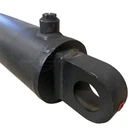
First off, let's understand what a Packer Cylinder is. In simple terms, it's a hydraulic cylinder that's used in various applications, especially in waste management. You know those big garbage trucks? Yeah, they've got Packer Cylinders in them. These cylinders help in compacting the waste, making it easier to transport and dispose of. There are different types too, like Tailgate Lift Cylinder, Compactor Cylinders, and Ejector Cylinders. Each has its own specific job, but they all work based on the principles of hydraulics.
Now, onto the vacuum environment part. A vacuum environment is basically a space where the pressure is much lower than the atmospheric pressure. It can be found in various industrial processes, like in some manufacturing operations or even in space. When we think about using a Packer Cylinder in such an environment, there are a few things we need to consider.
One of the main concerns is the seals. In a normal environment, the seals in a Packer Cylinder are designed to keep the hydraulic fluid inside and prevent leaks. But in a vacuum, the pressure difference can put a lot of stress on these seals. If the seals aren't strong enough, they might start to leak, which can cause the cylinder to malfunction. The lack of air pressure can also make the seals dry out faster, reducing their lifespan.
Another aspect is the lubrication. Hydraulic cylinders rely on proper lubrication to function smoothly. In a vacuum, the lubricants can behave differently. Some lubricants might evaporate or outgas, which means they release gases due to the low pressure. This can lead to a loss of lubrication and increased friction inside the cylinder. Increased friction not only makes the cylinder work harder but can also cause wear and tear on the internal components.
The materials used in the construction of the Packer Cylinder also matter. In a vacuum, some materials might react differently. For example, certain metals can oxidize or corrode at a faster rate due to the lack of a protective atmosphere. This can weaken the structure of the cylinder and make it less reliable over time.
However, it's not all doom and gloom. With the right design and modifications, it is possible to use a Packer Cylinder in a vacuum environment. First of all, we can use special seals that are designed to withstand the pressure difference in a vacuum. These seals are made from materials that are more resistant to the effects of low pressure and can maintain their integrity for longer.
When it comes to lubrication, there are vacuum-compatible lubricants available. These lubricants are formulated to minimize outgassing and provide effective lubrication even in a vacuum. They can help keep the cylinder running smoothly and reduce the risk of damage due to friction.
As for the materials, we can choose metals and alloys that are more resistant to corrosion in a vacuum. Stainless steel, for example, is a popular choice because it has good corrosion resistance properties. By using high-quality materials, we can ensure that the Packer Cylinder can withstand the harsh conditions of a vacuum environment.
In some industries, the need for using Packer Cylinders in a vacuum is quite high. For instance, in the semiconductor manufacturing industry, there are processes that require a vacuum environment. These processes often involve precise movements, and a well-designed Packer Cylinder can be used to achieve the required level of accuracy.
So, to answer the question, yes, a Packer Cylinder can be used in a vacuum environment, but it requires careful consideration and the right modifications. At our company, we have the expertise and experience to customize Packer Cylinders for vacuum applications. We understand the unique challenges and can work with you to design a solution that meets your specific needs.
If you're in need of Packer Cylinders for your operations, whether it's for a normal environment or a vacuum one, we'd love to hear from you. We can offer you high-quality products and excellent customer service. Don't hesitate to reach out to us for a consultation or to discuss your requirements. We're here to help you find the best solution for your business.


In conclusion, while using a Packer Cylinder in a vacuum environment has its challenges, it's definitely achievable with the right approach. By taking into account the factors like seals, lubrication, and materials, we can ensure that the cylinder performs reliably and efficiently. So, if you've got a project that involves a vacuum environment and you need a Packer Cylinder, give us a shout, and we'll work together to make it happen.
References
- Hydraulic Cylinder Design and Applications Handbook
- Vacuum Technology Principles and Practices