

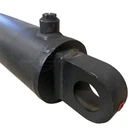



Hey there! As a supplier in the hydraulic system industry, I'm super excited to take you on a journey to understand how a hydraulic motor works. Hydraulic motors are like the unsung heroes in a whole bunch of machines we use every day. They're crucial in making things move smoothly and efficiently, whether it's in construction equipment, industrial machinery, or even some vehicles. So, let's dig in!
First off, what's a hydraulic motor? Well, it's a device that converts hydraulic pressure and flow into mechanical torque and rotation. In simpler terms, it takes the power from pressurized hydraulic fluid and turns it into the movement that makes machines do their jobs.


Let's start with the basic components of a hydraulic motor. There are a few key parts that make it all happen. One of the most important ones is the housing. This is like the protective shell that holds everything together. Inside the housing, you've got the rotor. The rotor is what actually rotates and generates the mechanical power. Then there are the vanes, pistons, or gears, depending on the type of hydraulic motor. These components work together to create the movement we need.
There are different types of hydraulic motors, and each works a bit differently. Let's talk about gear motors first. Gear motors are pretty simple in design. They have two gears - a driving gear and a driven gear. The pressurized hydraulic fluid enters the motor and pushes against the teeth of the gears. This causes the gears to rotate, and as they rotate, they transfer the power to the output shaft. Gear motors are known for their reliability and are often used in applications where a relatively low amount of torque is needed, like in some small industrial machines.
Next up are vane motors. Vane motors have a rotor with vanes that slide in and out. The hydraulic fluid enters the motor and creates pressure on one side of the vanes. This pressure causes the rotor to rotate. Vane motors are great because they can provide a smooth and consistent output. They're commonly used in applications where a medium amount of torque is required, such as in some mobile equipment.
Now, let's get into piston motors. Piston motors are a bit more complex but can deliver a high amount of torque. There are different types of piston motors, like axial piston motors and radial piston motors. In an axial piston motor, the pistons are arranged parallel to the axis of rotation. The hydraulic fluid enters the motor and pushes the pistons, which in turn causes the swashplate to tilt. This tilting action makes the pistons move in and out, creating the rotation. Radial piston motors, on the other hand, have pistons arranged radially around the shaft. The hydraulic fluid acts on the pistons, causing them to move radially and rotate the shaft. Piston motors are often used in heavy-duty applications, like in large construction equipment. If you're interested in piston pumps for trucks, you can check out Piston Pumps for Trucks.
So, how does the hydraulic fluid get to the motor in the first place? Well, it all starts with a hydraulic pump. The pump is responsible for creating the pressure in the hydraulic system. It sucks in the hydraulic fluid from a reservoir and then pumps it through the system at a high pressure. The pressurized fluid then travels through pipes or hoses to the hydraulic motor. Along the way, there are valves that control the flow and direction of the fluid. These valves are like traffic cops, making sure the fluid goes where it needs to go.
Once the fluid reaches the motor, it does its job of making the motor rotate. But what happens to the fluid after it's done its work? It returns to the reservoir through a return line. The fluid is then filtered and cooled before it's ready to be pumped back into the system again. This continuous cycle is what keeps the hydraulic system running smoothly.
Now, let's talk about some of the other components that are important in a hydraulic system. One of these is the seamless cold-drawn tube. These tubes are used to carry the hydraulic fluid from one part of the system to another. They're made through a special process that gives them a smooth interior surface, which helps to reduce friction and improve the flow of the fluid. If you want to learn more about seamless cold-drawn tubes, you can visit Seamless Cold-drawn Tube.
Another important component is the piston rod. The piston rod is connected to the piston in a piston motor. It transfers the force from the piston to the output shaft. Piston rods need to be strong and durable to withstand the high pressures and forces in the hydraulic system. You can find more information about piston rods at Piston Rod.
Hydraulic motors are really amazing pieces of technology. They offer a lot of advantages. For one, they can provide a high amount of torque in a relatively small package. This makes them ideal for applications where space is limited. They're also very efficient, which means they can convert a large percentage of the hydraulic energy into mechanical energy. And they're reliable. With proper maintenance, a hydraulic motor can last for a long time.
If you're in the market for a hydraulic system or any of its components, we're here to help. We've got a wide range of high-quality products that can meet your needs. Whether you're looking for a specific type of hydraulic motor, a seamless cold-drawn tube, or a piston rod, we've got you covered. So, if you're interested in learning more or want to start a procurement discussion, don't hesitate to reach out. We're always happy to talk about how we can help you with your hydraulic system needs.
In conclusion, understanding how a hydraulic motor works is key to getting the most out of your hydraulic system. It's a fascinating process that involves a lot of different components working together in harmony. Whether you're a professional in the industry or just someone who's curious about how things work, I hope this blog has given you a better understanding of hydraulic motors.
References
- "Hydraulic Systems and Fluid Power" by Anthony Esposito
- "Fluid Power with Applications" by Anthony Esposito