




A scissor dump trailer hoist is a crucial component in the operation of dump trailers, enabling the efficient unloading of materials. As a leading dump trailer hoist supplier, I am excited to share insights into how these remarkable mechanisms work.


Basic Structure of a Scissor Dump Trailer Hoist
The scissor dump trailer hoist consists of several key parts. At its core, it has a set of scissor arms. These arms are typically made of high - strength steel to withstand the heavy loads they will be subjected to. The scissor arms are connected at multiple pivot points, which allow them to expand and contract in a synchronized manner.
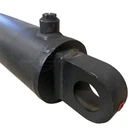
There is also a hydraulic system, which is the power source for the hoist. The hydraulic system includes a hydraulic pump, hydraulic cylinders, and a reservoir for the hydraulic fluid. The pump is responsible for generating the pressure needed to move the hydraulic fluid through the system. The hydraulic cylinders are connected to the scissor arms and are what actually cause the scissor arms to move.
The Working Principle of the Hydraulic System
The hydraulic system operates on the principle of Pascal's law. According to Pascal's law, when pressure is applied to a confined fluid, the pressure is transmitted equally in all directions. In the case of a scissor dump trailer hoist, the hydraulic pump forces hydraulic fluid into the hydraulic cylinders.
When the pump is activated, it draws hydraulic fluid from the reservoir and pressurizes it. This pressurized fluid is then sent to the hydraulic cylinders. As the fluid enters the cylinders, it pushes the pistons inside the cylinders. The movement of the pistons in the cylinders is what causes the scissor arms to extend or retract.
Extension Phase
During the extension phase, when the operator wants to lift the dump trailer bed to unload its contents, the hydraulic pump starts working. The pressurized hydraulic fluid is directed into the base of the hydraulic cylinders. As the fluid fills the cylinders, the pistons are pushed outwards.
The movement of the pistons causes the scissor arms to expand. The scissor arms are designed in such a way that as they expand, they lift the dump trailer bed upwards. The angle of the scissor arms changes as they extend, and this change in angle provides the necessary vertical force to lift the heavy load on the trailer bed.
As the scissor arms continue to expand, the height of the dump trailer bed increases. This allows the materials on the bed, such as gravel, sand, or construction debris, to slide off the bed and be unloaded at the desired location.
Retraction Phase
Once the unloading is complete, the operator needs to lower the dump trailer bed back to its original position. To do this, the hydraulic system is reversed. The hydraulic pump changes the direction of the flow of the hydraulic fluid.
The pressurized fluid is now directed out of the hydraulic cylinders. As the fluid leaves the cylinders, the pistons are pulled back into the cylinders. This causes the scissor arms to contract. As the scissor arms contract, the dump trailer bed is gradually lowered back to its horizontal position.
Advantages of Scissor Dump Trailer Hoists
One of the main advantages of scissor dump trailer hoists is their stability. The scissor design provides a wide base of support, which helps to distribute the weight of the load evenly. This reduces the risk of the trailer tipping over during the unloading process, especially when dealing with heavy or unevenly distributed loads.
Another advantage is their relatively simple design. Compared to some other types of hoists, scissor hoists have fewer moving parts. This makes them easier to maintain and repair. With proper maintenance, a scissor dump trailer hoist can have a long service life, providing reliable performance over many years.
Applications
Scissor dump trailer hoists are widely used in various industries. In the construction industry, they are used to transport and unload construction materials such as concrete, bricks, and lumber. In the agriculture sector, they can be used to transport and unload grains, fertilizers, and animal feed.
They are also commonly used in waste management. Dump trailers with scissor hoists can be used to collect and transport waste materials to landfills or recycling facilities. The efficient unloading mechanism provided by the scissor hoist allows for quick and easy disposal of waste.
Our Product Offerings
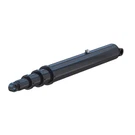
As a dump trailer hoist supplier, we offer a wide range of products to meet the diverse needs of our customers. We have Dump Trailer Telescopic Kits that are designed to provide enhanced lifting capabilities. These kits are engineered with high - quality materials and advanced hydraulic technology to ensure reliable and efficient operation.
Our Dump Bed Trucks Hoist is another popular product. It is specifically designed for dump bed trucks and offers excellent performance in terms of lifting capacity and durability. Whether you are using the truck for construction, mining, or other heavy - duty applications, our dump bed trucks hoist can meet your requirements.
We also provide Tipper Trailer Kits. These kits are easy to install and can transform a regular trailer into a functional tipper trailer. They are available in different sizes and configurations to suit various trailer types and load capacities.
Contact for Purchase and Consultation
If you are in the market for a high - quality dump trailer hoist, we would love to hear from you. Our team of experts is ready to assist you in selecting the right product for your specific needs. Whether you need advice on the best hoist for your trailer, or you have questions about installation and maintenance, we are here to help. Contact us today to start the conversation about enhancing your dump trailer's performance with our top - notch hoist products.
References
- "Hydraulic Systems and Components" - A textbook on hydraulic engineering principles.
- "Trailer Design and Engineering" - A publication that covers the design and operation of various types of trailers, including dump trailers.