




As a supplier of hydraulic pistons, I've had the privilege of witnessing firsthand the intricate dance between actuators and hydraulic pistons. This relationship is at the heart of countless industrial applications, powering everything from heavy machinery to precision manufacturing equipment. In this blog post, I'll delve into the inner workings of how an actuator operates in tandem with a hydraulic piston, exploring the principles, components, and real-world applications that make this partnership so powerful.
Understanding the Basics: Actuators and Hydraulic Pistons
Before we dive into the details of how actuators and hydraulic pistons work together, let's first establish a clear understanding of what each component is and what it does.
An actuator is a device that converts energy into mechanical motion. In the context of hydraulic systems, actuators are typically powered by hydraulic fluid, which is pressurized to generate force and movement. There are several types of hydraulic actuators, including cylinders, motors, and rotary actuators, each designed for specific applications and requirements.
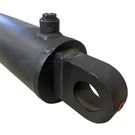
A hydraulic piston, on the other hand, is a key component of a hydraulic cylinder. It is a cylindrical device that moves back and forth within the cylinder barrel, driven by the pressure of the hydraulic fluid. The piston is connected to a rod, which extends outside the cylinder and is used to transfer the force generated by the piston to the load.
How Actuators and Hydraulic Pistons Work Together
The interaction between an actuator and a hydraulic piston is based on the principles of fluid mechanics and hydraulics. When hydraulic fluid is pumped into one end of the cylinder, it creates pressure against the piston. This pressure causes the piston to move in the opposite direction, pushing the rod out of the cylinder and applying force to the load.
Conversely, when the hydraulic fluid is released from the cylinder, the pressure on the piston decreases, allowing the piston to move back to its original position. This movement of the piston and rod is what enables the actuator to perform its intended function, whether it's lifting a heavy load, moving a machine component, or controlling the flow of a fluid.
Components of a Hydraulic System
To fully understand how actuators and hydraulic pistons work together, it's important to have a basic understanding of the components that make up a hydraulic system. These components include:
- Hydraulic Pump: The hydraulic pump is responsible for generating the pressure needed to move the hydraulic fluid through the system. It draws fluid from a reservoir and pressurizes it before sending it to the actuator.
- Hydraulic Fluid: The hydraulic fluid is the medium through which the pressure is transmitted in the system. It is typically a special type of oil that is designed to have low compressibility and good lubricating properties.
- Hydraulic Cylinder: The hydraulic cylinder is the component that contains the piston and rod. It is designed to withstand the high pressures generated by the hydraulic fluid and to provide a smooth and controlled movement of the piston.
- Valves: Valves are used to control the flow and direction of the hydraulic fluid in the system. They can be used to start, stop, or change the direction of the actuator's movement, as well as to regulate the pressure and flow rate of the fluid.
- Reservoir: The reservoir is a container that stores the hydraulic fluid. It also helps to cool the fluid and remove any air or contaminants that may be present in the system.
Real-World Applications
The combination of actuators and hydraulic pistons is used in a wide range of real-world applications, from heavy construction equipment to precision manufacturing processes. Here are a few examples:
- Construction Equipment: Hydraulic cylinders and actuators are commonly used in construction equipment such as excavators, bulldozers, and cranes. They are used to power the movement of the machine's arms, buckets, and other components, allowing operators to lift and move heavy loads with ease.
- Industrial Machinery: In industrial settings, hydraulic systems are used to power a variety of machinery, including presses, shears, and injection molding machines. The precise control and high force capabilities of hydraulic actuators make them ideal for these types of applications.
- Automotive Industry: Hydraulic systems are also used in the automotive industry, particularly in braking systems and power steering. Hydraulic cylinders are used to apply the force needed to stop the vehicle or to assist the driver in turning the steering wheel.
- Aerospace Industry: In the aerospace industry, hydraulic systems are used to control the movement of aircraft components such as flaps, landing gear, and flight controls. The reliability and precision of hydraulic actuators are critical in ensuring the safety and performance of aircraft.
Advantages of Using Actuators with Hydraulic Pistons
There are several advantages to using actuators with hydraulic pistons in industrial applications. These include:
- High Force Capability: Hydraulic systems are capable of generating very high forces, making them ideal for applications that require heavy lifting or pushing.
- Precise Control: Hydraulic actuators can be controlled with a high degree of precision, allowing for accurate positioning and movement of the load.
- Smooth Operation: The use of hydraulic fluid as a medium for transmitting force results in a smooth and continuous movement of the actuator, reducing wear and tear on the components.
- Reliability: Hydraulic systems are known for their reliability and durability, making them suitable for use in harsh and demanding environments.
- Versatility: Hydraulic actuators can be designed to meet a wide range of application requirements, from simple linear motion to complex multi-axis movements.
Roll-off Truck Cylinder, Brick Machine Hydraulic Cylinders, and Cross Tube Hydraulic Cylinders
As a supplier of hydraulic pistons, we offer a wide range of products to meet the needs of different industries and applications. Our Roll-off Truck Cylinder is designed specifically for use in roll-off trucks, providing the high force and reliability needed to lift and dump heavy loads. Our Brick Machine Hydraulic Cylinders are used in brick manufacturing equipment, offering precise control and long service life. And our Cross Tube Hydraulic Cylinders are ideal for applications that require a compact and lightweight design.


Conclusion
The relationship between actuators and hydraulic pistons is a fundamental aspect of hydraulic systems, enabling a wide range of industrial applications. By understanding how these components work together, as well as the principles and components of hydraulic systems, you can make informed decisions when selecting the right equipment for your specific needs.
If you're interested in learning more about our hydraulic pistons or have any questions about how they can be used in your applications, please don't hesitate to contact us. We're here to help you find the best solutions for your hydraulic needs and to ensure the success of your projects.
References
- "Hydraulic Systems: Principles, Components, and Applications" by Eugene A. Avallone and Theodore Baumeister III
- "Fluid Power Engineering" by F. Shearer and J. J. Richardson
- "Hydraulic Cylinders: Design and Application" by W. C. Grumman