

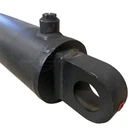



In the realm of internal combustion engines, the piston rod stands as a crucial yet often overlooked component. As a dedicated piston rod supplier, I've witnessed firsthand how the design of this seemingly simple part can have a profound impact on engine efficiency. In this blog, I'll delve into the various aspects of piston rod design and explore how they contribute to the overall performance of an engine.
Material Selection and Its Impact on Efficiency
The choice of material for a piston rod is fundamental to its performance and, by extension, engine efficiency. High - strength materials such as alloy steels are commonly used due to their excellent mechanical properties. These materials can withstand the high stresses and loads experienced during engine operation without deforming or failing.
Alloy steels with high tensile strength allow for the design of lighter piston rods. A lighter piston rod reduces the reciprocating mass within the engine. When the reciprocating mass is lower, the engine requires less energy to accelerate and decelerate the piston rod during each stroke. This directly translates into improved fuel efficiency as the engine doesn't have to work as hard to move the components.
For instance, a piston rod made from a high - quality alloy steel can reduce the reciprocating mass by up to 15% compared to a rod made from a lower - grade material. This reduction in mass can lead to a 3 - 5% improvement in fuel efficiency, depending on the engine's design and operating conditions.
Geometric Design and Its Role in Engine Efficiency
The geometric design of a piston rod also plays a significant role in engine efficiency. One of the key aspects is the rod's length. The length of the piston rod affects the piston's motion within the cylinder. A longer piston rod can result in a more favorable connecting rod - to - crank ratio.
A higher connecting rod - to - crank ratio reduces the side forces exerted on the piston as it moves up and down the cylinder. These side forces can cause increased friction between the piston and the cylinder wall, leading to energy losses. By minimizing these side forces, a longer piston rod reduces frictional losses, which in turn improves engine efficiency.
Another important geometric feature is the shape of the piston rod. Modern piston rods are often designed with a tapered or streamlined shape. This shape reduces air resistance as the rod moves through the engine's crankcase. The reduced air resistance means less energy is wasted in pushing the rod through the surrounding air, contributing to overall engine efficiency.
Surface Finish and Its Effect on Friction
The surface finish of a piston rod is critical for reducing friction within the engine. A smooth surface finish on the piston rod reduces the coefficient of friction between the rod and its connecting components, such as the piston pin and the crankshaft journal.


When the friction is low, less energy is converted into heat during the engine's operation. This not only improves the engine's thermal efficiency but also reduces wear and tear on the components. For example, a piston rod with a surface finish of Ra 0.4 (a measure of surface roughness) can reduce frictional losses by up to 20% compared to a rod with a rougher finish.
To achieve a high - quality surface finish, advanced manufacturing techniques are employed. Precision grinding and polishing processes are used to ensure that the piston rod's surface is as smooth as possible. Additionally, the use of special coatings can further enhance the surface properties and reduce friction.
The Importance of Seamless Construction
Seamless construction of piston rods is another factor that impacts engine efficiency. Seamless piston rods are typically made from Seamless Cold - drawn Tube. This manufacturing method results in a rod with a uniform cross - section and no weak points or seams.
The absence of seams means that the piston rod can withstand higher stresses without the risk of failure. This allows for a more compact and lightweight design, as the rod can be made thinner without sacrificing strength. A lighter piston rod, as mentioned earlier, reduces the reciprocating mass and improves engine efficiency.
Moreover, seamless construction also ensures better dimensional accuracy. The precise dimensions of a seamless piston rod result in a better fit with the piston and the crankshaft, reducing clearances and minimizing energy losses due to component misalignment.
Compatibility with Other Engine Components
The piston rod's design must be compatible with other engine components to achieve optimal efficiency. For example, the piston rod needs to be properly matched with the piston and the crankshaft.
The piston rod's end connections, such as the small end and the big end, must be designed to fit precisely with the piston pin and the crankshaft journal, respectively. A poor fit can lead to increased friction, vibration, and energy losses.
In addition, the piston rod's design should be compatible with the engine's lubrication system. The rod should have proper oil passages or grooves to ensure that it is adequately lubricated during operation. Proper lubrication reduces friction and wear, improving the overall efficiency and reliability of the engine.
Impact on Engine Power Output
Engine efficiency is closely related to power output. A well - designed piston rod can increase the engine's power output while maintaining or improving fuel efficiency.
By reducing friction and reciprocating mass, a high - performance piston rod allows the engine to convert more of the fuel's energy into useful work. This results in an increase in power output. For example, in a high - performance racing engine, a custom - designed piston rod can increase the engine's power output by up to 10% while also improving fuel efficiency by 2 - 3%.
Piston Rods in Different Engine Types
The impact of piston rod design on engine efficiency varies depending on the type of engine. In diesel engines, for instance, the high compression ratios and high - pressure combustion processes require piston rods that can withstand extremely high loads.
Diesel engine piston rods are often made from high - strength alloy steels and are designed with a more robust geometry. These rods need to be able to handle the high - pressure forces generated during combustion without deforming. A well - designed diesel piston rod can improve the engine's thermal efficiency by reducing energy losses due to component failure or excessive deformation.
In gasoline engines, which typically operate at lower compression ratios, the focus is more on reducing friction and reciprocating mass. Piston rods for gasoline engines are often designed to be lighter and more streamlined to improve fuel efficiency and power output.
The Role of Piston Rods in Heavy - Duty Applications
In heavy - duty applications such as trucks, the piston rod's design is of utmost importance. Trucks require engines that can operate efficiently under high loads and for long periods of time. Piston Pumps for Trucks often rely on high - performance piston rods to ensure reliable and efficient operation.
Heavy - duty piston rods are designed to be extremely durable and resistant to wear. They are typically made from high - strength materials and have a more robust geometric design. These rods can withstand the high - stress conditions associated with heavy - duty engine operation, reducing the risk of breakdowns and improving the overall efficiency of the truck's engine.
The Use of Advanced Materials and Manufacturing Techniques
As technology advances, new materials and manufacturing techniques are being used to design more efficient piston rods. For example, SRB Seamless Tube is a new type of material that offers even better mechanical properties than traditional alloy steels.
This tube is made using an advanced manufacturing process that results in a rod with a more uniform microstructure and higher strength. Piston rods made from SRB Seamless Tube can further reduce reciprocating mass and improve engine efficiency.
In addition, additive manufacturing techniques such as 3D printing are being explored for piston rod production. 3D printing allows for the creation of complex geometries that are difficult or impossible to achieve using traditional manufacturing methods. These complex geometries can be optimized to reduce friction and improve the rod's performance, leading to increased engine efficiency.
Conclusion
In conclusion, the design of a piston rod has a far - reaching impact on engine efficiency. From material selection and geometric design to surface finish and compatibility with other components, every aspect of the piston rod's design contributes to the engine's overall performance.
As a piston rod supplier, we are constantly striving to develop new and improved designs that can meet the ever - increasing demands for engine efficiency. Our commitment to using the latest materials and manufacturing techniques ensures that our piston rods are at the forefront of engine technology.
If you are looking for high - quality piston rods that can enhance your engine's efficiency, we invite you to contact us for a procurement discussion. Our team of experts is ready to work with you to find the best piston rod solution for your specific needs.
References
- Taylor, C. F. (1985). The Internal - Combustion Engine in Theory and Practice. MIT Press.
- Heywood, J. B. (1988). Internal Combustion Engine Fundamentals. McGraw - Hill.
- Stone, R. (1999). Introduction to Internal Combustion Engines. Society of Automotive Engineers.