




Hey there! As a supplier in the hydraulic system industry, I often get asked about directional control valves. One of the most common questions is, "How many positions and ways can a directional control valve have?" Well, let's dive right into it.
First off, let's understand what a directional control valve does. In a hydraulic system, these valves are like traffic cops. They control the direction of the fluid flow, which in turn determines the movement of hydraulic actuators like cylinders and motors. The number of positions and ways a directional control valve can have greatly affects its functionality and the complexity of the hydraulic circuits it can be used in.
Positions of a Directional Control Valve
The position of a directional control valve refers to the different states in which the valve can be. Think of it as different settings on a switch. Each position changes the way the fluid flows through the valve.
2 - Position Valves
These are the simplest type of directional control valves. They have two positions: open and closed, or on and off. In the open position, the fluid can flow through the valve, and in the closed position, the flow is blocked. For example, in a simple hydraulic circuit that controls the movement of a single-acting cylinder, a 2 - position valve can be used to either supply fluid to the cylinder to extend it or block the fluid flow to keep it in place.
3 - Position Valves
3 - position valves offer more flexibility. They have three distinct positions: the center position and two end positions. The center position can have different functions depending on the design. It can be a closed center, where all ports are blocked, preventing fluid flow. This is useful when you want to hold an actuator in place. Or it can be an open center, where the fluid can flow freely through the valve without actuating the load. The two end positions are used to control the movement of the actuator in two different directions. For instance, in a double - acting cylinder, the 3 - position valve can be used to extend or retract the cylinder.
There are also valves with more than 3 positions, but they are less common and are usually used in very specialized hydraulic systems that require multiple states of operation.
Ways of a Directional Control Valve
The number of ways in a directional control valve indicates the number of ports through which the fluid can enter or exit the valve. Each way represents a different path for the fluid flow.
2 - Way Valves
A 2 - way valve has two ports: an inlet and an outlet. As mentioned earlier, a 2 - way valve can be used to simply control the flow of fluid, either allowing it to pass through or blocking it. It's like a simple on - off switch for the fluid flow in a hydraulic line.
3 - Way Valves
3 - way valves have three ports. They are often used to either direct the fluid to an actuator or divert it back to the reservoir. For example, in a hydraulic circuit with a single - acting cylinder, a 3 - way valve can be used to supply fluid to the cylinder to make it extend and then divert the fluid back to the reservoir when the cylinder needs to retract under the action of a spring.
4 - Way Valves
4 - way valves are very common in hydraulic systems. They have four ports: two ports are connected to the actuator (like a double - acting cylinder), one is the inlet for the pressurized fluid from the pump, and the other is the return port to the reservoir. A 4 - way valve is typically used in combination with a 3 - position valve to control the bidirectional movement of a double - acting cylinder. By changing the position of the valve, the fluid can be directed to either side of the cylinder to extend or retract it.
There are also valves with more than 4 ways, such as 5 - way or 6 - way valves. These are used in more complex hydraulic systems where multiple actuators need to be controlled or where there are more complex fluid flow requirements.


Combinations of Positions and Ways
The most common combinations in the hydraulic industry are 2 - way 2 - position valves, 3 - way 2 - position valves, 4 - way 3 - position valves, etc. The choice of the combination depends on the specific requirements of the hydraulic system.
For example, a 4 - way 3 - position valve is widely used in industrial hydraulic systems because it can effectively control the bidirectional movement of a double - acting cylinder and has a center position that can be configured according to the needs of the system. If you need to hold the cylinder in place, a closed - center 4 - way 3 - position valve can be used. If you want the fluid to circulate freely when the cylinder is not in operation, an open - center valve can be selected.
Importance of Choosing the Right Valve
Selecting the correct number of positions and ways for a directional control valve is crucial for the proper functioning of a hydraulic system. If you choose a valve with too few positions or ways, the system may not be able to perform the required tasks. For example, if you use a 2 - way 2 - position valve in a system that requires bidirectional movement of a double - acting cylinder, it won't work as expected.
On the other hand, choosing a valve with too many positions or ways can lead to unnecessary complexity and increased cost. So, it's important to carefully analyze the requirements of the hydraulic system, such as the number of actuators, the type of movement required, and the operating conditions, before selecting a directional control valve.
Related Components in Hydraulic Systems
In a hydraulic system, directional control valves work in conjunction with other components. For example, Seamless Cold - drawn Tube is used to transport the hydraulic fluid from the pump to the valve and then to the actuator. These tubes are known for their high strength and smooth inner surface, which helps in reducing friction and ensuring efficient fluid flow.
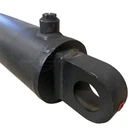
Piston Rod is another important component in a hydraulic cylinder. It is connected to the piston and transfers the force generated by the hydraulic fluid to the load. A high - quality piston rod is essential for the reliable operation of the hydraulic cylinder.
SRB Seamless Tube is also commonly used in hydraulic systems. It offers excellent corrosion resistance and can withstand high pressures, making it suitable for use in harsh operating environments.
Conclusion
In conclusion, the number of positions and ways of a directional control valve can vary widely, from simple 2 - way 2 - position valves to more complex multi - way multi - position valves. Understanding these concepts is essential for designing and maintaining efficient hydraulic systems.
If you're in the market for hydraulic components, including directional control valves, seamless tubes, and piston rods, I'd love to have a chat with you. Whether you need help in selecting the right components for your specific application or have any questions about hydraulic systems, feel free to reach out. Let's work together to build the best hydraulic solutions for your needs.
References
- Fluid Power Handbook, various authors
- Hydraulic System Design and Application Guide, industry experts