

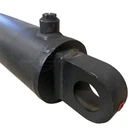



As a supplier of welded cylinders, I've witnessed firsthand the critical role welding efficiency plays in our industry. Welded cylinders are used in a wide range of applications, from Hydraulic Piston systems to Side Tipper Cylinder mechanisms and Hydraulic Crutch devices. Improving the welding efficiency of these cylinders can lead to significant cost savings, increased production rates, and enhanced product quality. In this blog post, I'll share some practical strategies that we've found effective in our operations.
1. Optimize Welding Equipment
The first step in improving welding efficiency is to ensure that you're using the right equipment. Modern welding machines offer advanced features that can significantly speed up the welding process. For example, inverter-based welding machines are more energy - efficient and can provide a more stable arc, resulting in better weld quality and faster welding speeds.
Investing in automated welding equipment can also yield substantial benefits. Robotic welding systems can perform repetitive welding tasks with high precision and consistency. They can work continuously without breaks, which is especially useful for large - scale production of welded cylinders. These robots can be programmed to follow specific welding paths, ensuring that each weld is of the same high quality.
Another aspect of equipment optimization is regular maintenance. A well - maintained welding machine will operate more efficiently. This includes cleaning the torch, checking the wire feed system, and ensuring that the gas flow is consistent. By keeping the equipment in top - notch condition, you can minimize downtime due to equipment failures and maintain a high level of welding efficiency.
2. Select the Right Welding Process
There are several welding processes available, and choosing the most suitable one for welded cylinders is crucial. Gas Metal Arc Welding (GMAW), also known as MIG welding, is a popular choice for welding cylinders. It offers high deposition rates, which means that more filler metal can be added to the weld joint in a shorter time. This process is also relatively easy to learn and can be automated, making it ideal for mass production.
Flux - Cored Arc Welding (FCAW) is another option. It provides good penetration and can be used in various positions. FCAW is especially useful when welding thick - walled cylinders as it can deposit a large amount of filler metal quickly.
Submerged Arc Welding (SAW) is a high - productivity welding process often used for welding long seams. It involves a continuously fed electrode and a layer of granular flux that covers the weld area. This process offers deep penetration and high deposition rates, making it suitable for large - diameter and thick - walled welded cylinders.
3. Improve Weld Joint Design
The design of the weld joint can have a significant impact on welding efficiency. A well - designed weld joint minimizes the amount of filler metal required and reduces the number of passes needed to complete the weld. For example, using a narrow - groove joint design can reduce the volume of the weld pool and the amount of filler metal added. This not only saves time but also reduces the cost of materials.
Proper fit - up of the parts to be welded is also essential. If the parts are not aligned correctly, it can lead to uneven welds and the need for additional grinding and re - welding. Using fixtures and jigs can help ensure accurate alignment and reduce the time spent on fitting and adjusting the parts during the welding process.
4. Train Welding Operators
Skilled welding operators are the backbone of any efficient welding operation. Providing comprehensive training to your welding staff is essential. Training should cover not only the technical aspects of welding, such as how to operate the welding equipment and select the appropriate welding parameters, but also safety procedures.
Regular refresher courses can keep the operators' skills up - to - date with the latest welding techniques and technologies. Encouraging operators to share their experiences and best practices can also lead to continuous improvement in the welding process. Additionally, setting up a performance - based incentive system can motivate operators to work more efficiently and produce high - quality welds.
5. Implement Quality Control Measures
Implementing a strict quality control system is crucial for maintaining welding efficiency. By catching and correcting welding defects early in the process, you can avoid costly rework and delays. Non - destructive testing methods, such as ultrasonic testing and X - ray testing, can be used to detect internal defects in the welds.
Visual inspection should also be carried out regularly during the welding process. Operators should be trained to identify common welding defects, such as porosity, cracks, and incomplete fusion, and take immediate corrective actions. By ensuring that each weld meets the required quality standards, you can reduce the number of rejected cylinders and improve overall production efficiency.
6. Manage Welding Consumables
Proper management of welding consumables, such as electrodes, wires, and shielding gases, is essential for efficient welding. Using the right type and size of consumables can improve weld quality and reduce welding time. For example, using a thinner welding wire can increase the welding speed, while using a high - quality shielding gas can improve the protection of the weld pool and reduce the occurrence of defects.
Monitoring the consumption of welding consumables can also help identify areas for cost savings. By analyzing the usage data, you can optimize the inventory management of consumables and avoid over - or under - stocking.

7. Streamline Production Processes
In addition to optimizing the welding process itself, streamlining the overall production process can also improve the welding efficiency of welded cylinders. This includes reducing the time spent on material handling, setup, and transportation between different production stages.
Implementing a lean manufacturing approach can help eliminate waste and non - value - added activities. For example, using a just - in - time inventory system can reduce the amount of inventory stored on - site, which in turn reduces the time and effort spent on inventory management.
8. Collaborate with Suppliers
Building strong relationships with your suppliers can also contribute to improved welding efficiency. Your suppliers can provide valuable insights into new materials and technologies that can enhance the welding process. For example, they may be able to recommend a new type of steel that is easier to weld or a more efficient shielding gas.

Collaborating with suppliers on product development can also lead to the design of cylinders that are more weld - friendly. By working together, you can identify opportunities to optimize the cylinder design for better welding performance and efficiency.
In conclusion, improving the welding efficiency of welded cylinders requires a comprehensive approach that encompasses equipment optimization, process selection, joint design, operator training, quality control, consumable management, production process streamlining, and supplier collaboration. By implementing these strategies, we as a welded cylinder supplier can not only increase our production rates and reduce costs but also improve the quality of our products.
If you're interested in our welded cylinders or want to discuss how we can further improve the welding efficiency for your specific requirements, please feel free to contact us for procurement and negotiation. We're always eager to work with you to find the best solutions.
References
- American Welding Society. (2023). Welding Handbook.
- AWS D1.1/D1.1M:2020, Structural Welding Code - Steel.
- Manufacturing Engineering Handbook. McGraw - Hill.