

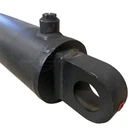



As a seasoned supplier of dump trailer hoists, I've witnessed firsthand the critical importance of compatibility in ensuring the optimal performance and safety of these essential components. In this blog post, I'll delve into the key compatibility requirements for a dump trailer hoist, providing valuable insights for anyone in the market for these products.
Trailer Specifications
The first and most fundamental aspect of compatibility is ensuring that the hoist is suitable for the specific dump trailer it will be installed on. This involves considering several key factors:
- Trailer Size and Capacity: The hoist must be capable of lifting the weight and volume of the trailer's payload. This means taking into account the trailer's length, width, height, and maximum load capacity. For instance, a larger trailer with a higher payload capacity will require a more powerful hoist.
- Trailer Design: Different trailers have varying designs, such as single-axle, tandem-axle, or tri-axle configurations. The hoist must be compatible with the trailer's axle arrangement and frame structure to ensure proper installation and operation.
- Mounting Points: The hoist needs to have the correct mounting points that align with the trailer's frame. This ensures a secure and stable connection, preventing any movement or misalignment during the lifting process.
Power Source Compatibility
Dump trailer hoists can be powered by various sources, including hydraulic systems, electric motors, or a combination of both. It's crucial to choose a hoist that is compatible with the available power source on the trailer:
- Hydraulic Systems: Most dump trailer hoists rely on hydraulic power. The hoist must be compatible with the trailer's hydraulic pump, reservoir, and hoses. This includes ensuring that the hoist's hydraulic pressure and flow requirements match those of the trailer's hydraulic system.
- Electric Motors: Electric hoists are becoming increasingly popular due to their simplicity and ease of use. When selecting an electric hoist, it's important to ensure that it is compatible with the trailer's electrical system, including the voltage, amperage, and wiring.
Control System Compatibility
The control system is another critical aspect of compatibility. It allows the operator to control the lifting and lowering of the dump trailer. There are several types of control systems available, including manual controls, remote controls, and automated controls.


- Manual Controls: Manual controls are the most basic type of control system. They typically consist of a lever or valve that the operator uses to control the flow of hydraulic fluid or electricity to the hoist. The hoist must be compatible with the manual control system's design and operation.
- Remote Controls: Remote controls offer greater convenience and flexibility, allowing the operator to control the hoist from a distance. When choosing a hoist with a remote control, it's important to ensure that the remote control is compatible with the hoist's receiver and that the signal range is sufficient for the intended use.
- Automated Controls: Automated controls use sensors and programmable logic controllers (PLCs) to automatically control the lifting and lowering of the dump trailer. These systems can be highly customized and offer precise control. However, the hoist must be compatible with the automated control system's programming and communication protocols.
Safety Features Compatibility
Safety is of utmost importance when it comes to dump trailer hoists. The hoist must be compatible with the trailer's safety features to ensure the well-being of the operator and others in the vicinity.
- Overload Protection: Overload protection is a crucial safety feature that prevents the hoist from lifting more weight than it is designed to handle. The hoist must be equipped with an overload protection device that is compatible with the trailer's weight capacity and the hoist's lifting mechanism.
- Latching Mechanisms: Latching mechanisms are used to secure the dump trailer in the raised position. The hoist must be compatible with the trailer's latching mechanism to ensure that it can be properly engaged and disengaged.
- Emergency Stop Buttons: Emergency stop buttons provide a quick and easy way to stop the hoist in case of an emergency. The hoist must be equipped with an emergency stop button that is compatible with the trailer's electrical system and can be easily accessed by the operator.
Compatibility with Accessories
In addition to the above factors, the hoist must also be compatible with any accessories that may be installed on the dump trailer. This includes items such as tarp systems, tailgates, and lighting.
- Tarp Systems: Tarp systems are used to cover the payload in the dump trailer. The hoist must be compatible with the tarp system's design and operation to ensure that it can be easily raised and lowered without interfering with the tarp.
- Tailgates: Tailgates are used to close the rear of the dump trailer. The hoist must be compatible with the tailgate's opening and closing mechanism to ensure that it can be properly operated.
- Lighting: Lighting is essential for visibility and safety, especially when operating the dump trailer at night. The hoist must be compatible with the trailer's lighting system to ensure that it does not interfere with the operation of the lights.
Conclusion
In conclusion, ensuring compatibility is crucial when selecting a dump trailer hoist. By considering the trailer specifications, power source, control system, safety features, and accessories, you can choose a hoist that will provide reliable and efficient performance. At our company, we offer a wide range of Dump Bed Trucks Hoist, Dump Trailer Telescopic Kits, and Tipper Trailer Kits that are designed to meet the diverse needs of our customers. If you have any questions or need assistance in selecting the right hoist for your dump trailer, please don't hesitate to contact us. We're here to help you make the best choice for your specific requirements.
References
- "Dump Trailer Hoist Installation and Maintenance Guide," Industry Standard Publication
- "Hydraulic System Basics for Dump Trailers," Hydraulic Equipment Manufacturer's Manual
- "Safety Regulations for Dump Trailer Hoists," Government Safety Agency Guidelines