

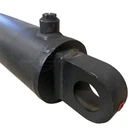

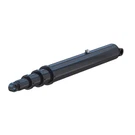


Hey there! As a supplier of telescopic cylinders, I've been in the thick of it, dealing with these amazing pieces of machinery day in and day out. Today, I'm gonna take you on a deep - dive into the dynamic characteristics of telescopic cylinders.
First off, let's talk about what telescopic cylinders are. They're multi - stage cylinders that can extend to a much longer length compared to their retracted state. This unique design makes them super useful in a whole bunch of applications, from dump trucks to construction equipment.
Extension and Retraction Speed
One of the most noticeable dynamic characteristics of telescopic cylinders is their extension and retraction speed. The speed at which these cylinders operate can vary depending on a few factors. For starters, the size of the hydraulic pump supplying the fluid to the cylinder plays a huge role. A larger pump can push more fluid into the cylinder at a faster rate, which in turn speeds up the extension process.
Also, the number of stages in the telescopic cylinder affects the speed. In general, cylinders with fewer stages tend to extend and retract faster than those with more stages. This is because there's less internal friction and less volume of fluid to move through the additional stages.
When it comes to real - world applications, the speed of a telescopic cylinder can make or break a job. For example, in a dump truck, a fast - extending cylinder can quickly lift the bed and unload the cargo, saving time and increasing productivity.
Load - Carrying Capacity
Another crucial dynamic characteristic is the load - carrying capacity. Telescopic cylinders are designed to handle heavy loads, but this capacity changes as the cylinder extends. When the cylinder is fully retracted, it can usually handle the maximum load specified by the manufacturer. As it starts to extend, the load - carrying capacity gradually decreases.
This is due to the fact that the effective cross - sectional area of the cylinder decreases with each extended stage. Think of it like a stack of tubes. When they're all nested together, they're stronger. But as you start pulling them out, the outer tubes have to bear more of the load, and the overall strength of the structure is reduced.
In applications like construction equipment, understanding the load - carrying capacity at different extension lengths is essential for safety. Overloading a telescopic cylinder can lead to cylinder failure, which can be extremely dangerous.
Stability
Stability is a big deal when it comes to telescopic cylinders. As the cylinder extends, it becomes more prone to buckling. Buckling occurs when the cylinder bends under the load instead of extending straight. This can be caused by uneven loading, misalignment, or simply exceeding the cylinder's capacity.
To improve stability, manufacturers use various design features. For example, some telescopic cylinders have guide rings or bushings that help keep the stages aligned as they extend and retract. Additionally, the material used in the construction of the cylinder also affects stability. High - strength steel is commonly used because it can withstand the forces exerted on the cylinder without deforming easily.
In applications where stability is critical, such as in aerial work platforms, these design features are a must. You don't want the platform to wobble or tip over while workers are up in the air.


Pressure and Flow Requirements
The pressure and flow requirements of a telescopic cylinder are closely related to its dynamic performance. The pressure needed to extend and retract the cylinder depends on the load it's carrying and the size of the cylinder. Higher loads and larger cylinders generally require higher pressures.
The flow rate of the hydraulic fluid is also important. A sufficient flow rate is needed to ensure that the cylinder can extend and retract at the desired speed. If the flow rate is too low, the cylinder will operate slowly, and if it's too high, it can cause excessive wear on the seals and other components.
When selecting a hydraulic pump for a telescopic cylinder, it's crucial to match the pressure and flow requirements of the cylinder. This ensures optimal performance and longevity of the cylinder.
Types of Telescopic Cylinders and Their Dynamic Traits
There are different types of telescopic cylinders, each with its own set of dynamic characteristics. For instance, Inverted Telescopic Cylinders have a unique design where the largest stage is on the inside. This design can provide different load - distribution characteristics compared to traditional telescopic cylinders.
Pin Mount Telescopic Cylinders are designed to be mounted using pins. This type of mounting can affect the cylinder's stability and how it responds to loads. The pins allow for some flexibility in movement, which can be beneficial in certain applications where the cylinder needs to adapt to different angles.
Trunnion Mount Telescopic Cylinders are mounted using trunnions, which are basically pivot points. This mounting style provides a more stable base for the cylinder and can help reduce the risk of buckling.
Impact of Maintenance on Dynamic Characteristics
Regular maintenance is key to keeping the dynamic characteristics of telescopic cylinders in top shape. Over time, the seals in the cylinder can wear out, which can lead to fluid leaks. Leaks can cause a drop in pressure and flow, affecting the cylinder's speed and load - carrying capacity.
Lubrication is also important. Proper lubrication reduces friction between the stages of the cylinder, which helps maintain smooth operation and can extend the life of the cylinder. Additionally, checking for signs of wear and damage, such as scratches or dents on the cylinder walls, is essential. These issues can affect the stability and performance of the cylinder.
If you neglect maintenance, you might find that your telescopic cylinder starts to operate sluggishly, or worse, fails completely. And that can lead to costly downtime and repairs.
Wrapping It Up
So, there you have it - a detailed look at the dynamic characteristics of telescopic cylinders. These cylinders are truly remarkable pieces of engineering, but to get the most out of them, you need to understand how they work and what factors can affect their performance.
Whether you're in the market for a new telescopic cylinder or you're looking to optimize the performance of the ones you already have, it's important to consider all these dynamic characteristics. And if you're in need of high - quality telescopic cylinders, we're here to help. We've got a wide range of options to suit different applications and requirements.
If you're interested in learning more or discussing a potential purchase, don't hesitate to reach out. We're always happy to have a chat and help you find the perfect telescopic cylinder for your needs.
References
- Hydraulic Cylinder Handbook, Various Industry Publications
- Engineering Principles of Telescopic Cylinders, Technical Journals