

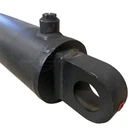



Agricultural cylinders play a crucial role in the functionality of various agricultural machinery. As a leading supplier of high - quality agricultural cylinders, I have witnessed firsthand how the installation position of these cylinders can significantly impact the performance and efficiency of agricultural equipment. In this blog, we will explore the different installation positions for agricultural cylinders in agricultural machinery.
Front - Mounted Installation
One of the common installation positions for agricultural cylinders is at the front of the machinery. For example, in front - end loaders, hydraulic cylinders are typically installed at the front to lift and tilt the loader bucket. These [Hydraulic Tilt Cylinders](/agricultural - cylinders/hydraulic - tilt - cylinders.html) are designed to provide the necessary force to raise and lower the bucket, allowing farmers to easily scoop up and transport materials such as soil, gravel, or hay.
The front - mounted installation offers several advantages. Firstly, it provides a direct and efficient way to control the movement of the attached implement. Since the cylinder is close to the point of action, there is less loss of force due to mechanical transmission. Secondly, it allows for better visibility of the operation. The operator can clearly see the movement of the implement, which is essential for precise handling, especially when working in tight spaces or when performing delicate tasks.
In addition to front - end loaders, some plows and cultivators also use front - mounted cylinders. These cylinders can be used to adjust the angle and depth of the plow or cultivator, ensuring optimal soil penetration and tillage. By changing the position of the cylinder, farmers can adapt to different soil conditions and crop requirements.
Rear - Mounted Installation
Rear - mounted agricultural cylinders are commonly found on equipment such as tractors with rear - mounted implements. For instance, a three - point hitch system on a tractor often uses hydraulic cylinders to raise and lower the attached implements, like a mower or a harrow. The [Agricultural Hydraulic Cylinders](/agricultural - cylinders/agricultural - hydraulic - cylinders.html) in this system are responsible for providing the lifting and lowering force, allowing the operator to easily adjust the height of the implement according to the terrain and the task at hand.
The rear - mounted installation has its own set of benefits. It helps in maintaining the balance of the tractor. Since the weight of the implement is at the rear, the hydraulic cylinders can counteract the downward force, preventing the front of the tractor from lifting off the ground. This is particularly important when using heavy implements or when working on uneven terrain.
Moreover, rear - mounted cylinders provide a stable platform for the implement. They can be precisely controlled to ensure smooth and accurate movement of the implement, which is crucial for achieving consistent results in agricultural operations.
Side - Mounted Installation
Side - mounted agricultural cylinders are used in specific types of machinery where lateral movement is required. For example, in some adjustable - width cultivators or planters, side - mounted cylinders are used to change the width of the implement. These cylinders allow the operator to adjust the spacing between the tines or the planting units, depending on the crop variety and the desired row spacing.
The side - mounted installation offers flexibility in adjusting the width of the implement without the need for manual re - adjustment. This saves time and labor, especially when working on large fields. Additionally, it enables the machinery to adapt to different field conditions and crop requirements more efficiently.
Vertical Installation
Vertical installation of agricultural cylinders is often seen in equipment such as silo unloaders or grain elevators. In these applications, the cylinders are used to lift or lower heavy loads vertically. The [Tie Rod Hydraulic Cylinder](/agricultural - cylinders/tie - rod - hydraulic - cylinder.html) is a common type used in vertical installations. It provides a strong and stable lifting force, ensuring the safe and efficient movement of grain or other agricultural products.
Vertical installation requires careful consideration of the load capacity and the stability of the cylinder. The cylinder must be able to withstand the weight of the load and any additional forces generated during the lifting or lowering process. Proper mounting and alignment are also crucial to prevent any misalignment or damage to the cylinder.
Considerations for Installation Positions
When determining the installation position of agricultural cylinders, several factors need to be taken into account. Firstly, the type of agricultural machinery and the specific task it is designed for play a significant role. Different tasks require different types of movement, and the installation position should be chosen to optimize the performance of the machinery.
Secondly, the available space on the machinery is an important consideration. The cylinder should be installed in a location where it does not interfere with other components of the machinery and where it can be easily accessed for maintenance and repair.
Thirdly, the load capacity and the force requirements of the task need to be considered. The cylinder must be able to provide enough force to perform the required movement, and the installation position should be such that the force is transmitted efficiently.
Finally, the durability and reliability of the cylinder are crucial. The installation position should protect the cylinder from environmental factors such as dirt, moisture, and debris, which can cause damage and reduce the lifespan of the cylinder.
Importance of Choosing the Right Installation Position
Choosing the right installation position for agricultural cylinders is essential for the overall performance and efficiency of agricultural machinery. A well - placed cylinder can improve the accuracy and precision of the operation, reduce the wear and tear on the machinery, and increase the productivity of the agricultural process.


On the other hand, an improper installation position can lead to various problems. For example, if the cylinder is installed in a location where it is exposed to excessive stress or vibration, it may fail prematurely, resulting in costly repairs and downtime. Additionally, an incorrect installation can lead to inefficient use of energy, as the cylinder may not be able to transmit the force effectively.
Conclusion
In conclusion, the installation position of agricultural cylinders in agricultural machinery is a critical factor that affects the performance, efficiency, and durability of the equipment. Whether it is front - mounted, rear - mounted, side - mounted, or vertically installed, each position has its own advantages and is suitable for specific types of agricultural tasks.
As a trusted supplier of agricultural cylinders, we understand the importance of choosing the right installation position. We offer a wide range of high - quality [Agricultural Hydraulic Cylinders](/agricultural - cylinders/agricultural - hydraulic - cylinders.html) that are designed to meet the diverse needs of the agricultural industry. Our experienced team can provide professional advice on the best installation positions for your specific machinery and requirements.
If you are in the market for agricultural cylinders or need more information about our products, we encourage you to contact us for a detailed discussion. Our experts are ready to assist you in finding the perfect solution for your agricultural machinery.
References
- Smith, J. (2018). Agricultural Machinery Hydraulics. Agricultural Engineering Journal, 35(2), 45 - 56.
- Brown, A. (2019). The Impact of Cylinder Installation on Agricultural Equipment Performance. Journal of Agricultural Technology, 42(3), 78 - 89.
- Green, C. (2020). Optimizing Agricultural Cylinder Installation Positions. Agricultural Innovation Review, 12(4), 32 - 40.