

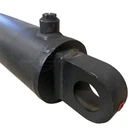

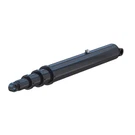


As a leading supplier of Ejector Cylinders, I've witnessed firsthand the critical role these components play in pneumatic systems. In this blog, I'll delve into the installation requirements for ejector cylinders in a pneumatic system, offering insights based on years of industry experience.
Understanding Ejector Cylinders in Pneumatic Systems
Ejector cylinders are essential parts of pneumatic systems, commonly used in various industrial applications such as garbage trucks, manufacturing plants, and automation systems. They work by converting the energy of compressed air into linear motion, which is then used to perform tasks like pushing, pulling, or ejecting objects.
In a garbage truck, for example, Ejector Cylinders are used to push the waste out of the truck's container. In manufacturing, they can be used to eject finished products from molds or to move materials along a production line.
Pre - installation Considerations
System Compatibility
Before installing an ejector cylinder, it's crucial to ensure that it is compatible with the existing pneumatic system. This includes checking the pressure rating, flow rate, and the type of air supply. The cylinder should be able to handle the maximum pressure that the system can generate without any risk of failure.
For instance, if the pneumatic system operates at a high - pressure range, the ejector cylinder must have a corresponding high - pressure rating. A mismatch in pressure ratings can lead to leaks, reduced performance, or even catastrophic failure of the cylinder.
Mounting Space
Another important pre - installation consideration is the available mounting space. Ejector cylinders come in various sizes and shapes, and it's essential to select a cylinder that can fit into the designated space. Measure the length, width, and height of the area where the cylinder will be installed, and compare these dimensions with the specifications of the cylinder.
Additionally, consider the orientation of the cylinder. Some applications may require the cylinder to be mounted horizontally, while others may need a vertical or angled installation. Make sure that the mounting method (e.g., flange, clevis, or foot mount) is suitable for the application and the available space.
Load Requirements
Understanding the load requirements is vital for proper installation. Determine the maximum force that the ejector cylinder needs to exert to perform its task. This includes considering the weight of the object being ejected, any frictional forces, and the acceleration requirements.
For example, in a garbage truck, the ejector cylinder must be able to push the heavy load of waste out of the container. If the load is too heavy for the cylinder, it may not be able to complete the task, or it may experience excessive wear and tear.


Installation Steps
1. Prepare the Mounting Surface
The first step in installing an ejector cylinder is to prepare the mounting surface. The surface should be clean, flat, and free of any debris or irregularities. Use a suitable cleaning agent to remove any dirt, oil, or rust from the surface.
If the mounting surface is not flat, it can cause uneven stress on the cylinder, leading to premature failure. In some cases, shims may be required to ensure a level installation.
2. Mount the Cylinder
Once the mounting surface is prepared, carefully mount the ejector cylinder using the appropriate mounting hardware. Follow the manufacturer's instructions for tightening the bolts or nuts to the specified torque values. Over - tightening or under - tightening can cause problems such as leaks or misalignment.
For example, if the cylinder is mounted using a flange, ensure that the flange is properly aligned with the mounting holes and that the bolts are tightened evenly.
3. Connect the Air Supply
After mounting the cylinder, connect the air supply lines. Use high - quality air hoses that are compatible with the pneumatic system. Make sure that the hoses are properly sized to handle the required flow rate.
Connect the air inlet and outlet ports of the cylinder to the corresponding ports on the pneumatic system. Use appropriate fittings and seals to prevent air leaks. Check for any signs of leakage after connecting the hoses by applying a soapy water solution to the connections. If bubbles form, there is a leak that needs to be fixed.
4. Install the Control Valves
Control valves are essential for regulating the flow of air to the ejector cylinder. Install the control valves in the pneumatic circuit according to the system design. These valves can be used to control the speed, direction, and force of the cylinder's movement.
For example, a directional control valve can be used to change the direction of the cylinder's stroke, while a flow control valve can be used to adjust the speed of the movement.
5. Test the System
Once the installation is complete, it's time to test the pneumatic system with the newly installed ejector cylinder. Start by slowly introducing air into the system and check for any abnormal noises, vibrations, or leaks.
Operate the control valves to test the movement of the cylinder. Make sure that the cylinder moves smoothly and accurately in both directions. Check the force output of the cylinder to ensure that it meets the load requirements.
If any issues are detected during the test, stop the system immediately and troubleshoot the problem. This may involve checking the connections, adjusting the valves, or replacing faulty components.
Additional Components and Their Installation
Packer Cylinder
In some applications, especially in garbage trucks, Packer Cylinder may be used in conjunction with ejector cylinders. The packer cylinder is responsible for compressing the waste before it is ejected.
When installing a packer cylinder, similar installation requirements apply. Ensure compatibility with the pneumatic system, check the mounting space, and consider the load requirements. The packer cylinder should be installed in a way that allows it to work in harmony with the ejector cylinder.
Tailgate Lift Cylinder
Another related component is the Tailgate Lift Cylinder, which is used to open and close the tailgate of a garbage truck. The installation of the tailgate lift cylinder also requires careful consideration of system compatibility, mounting space, and load requirements.
It should be installed in a position that allows for easy operation of the tailgate and that provides sufficient force to lift and lower the tailgate smoothly.
Maintenance and Safety Considerations
After the installation, regular maintenance is essential to ensure the long - term performance of the ejector cylinder. This includes checking for air leaks, lubricating the moving parts, and inspecting the seals and gaskets.
In terms of safety, always follow the manufacturer's safety guidelines during installation and operation. Wear appropriate personal protective equipment (PPE), such as safety glasses and gloves. Ensure that the pneumatic system is properly grounded to prevent static electricity buildup.
Conclusion
Installing ejector cylinders in a pneumatic system requires careful planning and attention to detail. From ensuring system compatibility and proper mounting to testing and maintenance, every step is crucial for the successful operation of the cylinder.
As a supplier of Ejector Cylinders, we offer a wide range of high - quality cylinders that are designed to meet the diverse needs of different applications. If you're in the market for ejector cylinders or need more information about their installation requirements, we're here to help. Contact us today to discuss your specific needs and start a procurement negotiation. We look forward to working with you to find the perfect solution for your pneumatic system.
References
- Pneumatic System Handbook, [Publisher Name], [Year of Publication]
- Ejector Cylinder Design and Application Guide, [Manufacturer Name], [Year of Publication]
- Industrial Pneumatic Systems: Principles and Applications, [Author Name], [Year of Publication]