

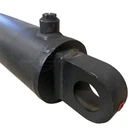

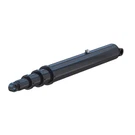


Concentricity tolerance is a critical aspect when it comes to telescopic cylinders. As a leading supplier of telescopic cylinders, I understand the importance of this concept and its impact on the performance and functionality of these essential components. In this blog post, I will delve into what concentricity tolerance is, why it matters in telescopic cylinders, and how we ensure high - quality concentricity in our products.


What is Concentricity Tolerance?
Concentricity tolerance refers to the allowable deviation from a perfect concentric relationship between two or more cylindrical features. In the context of telescopic cylinders, it is about the alignment of the different stages of the cylinder. A telescopic cylinder consists of multiple nested cylinders, each sliding within the other. When these cylinders are perfectly concentric, it means that their axes are precisely aligned. However, in real - world manufacturing, achieving absolute concentricity is almost impossible. So, a tolerance is defined, which is the maximum amount by which the axes of the cylinders can deviate from perfect alignment and still meet the required performance standards.
The concentricity tolerance is usually specified in engineering drawings using geometric dimensioning and tolerancing (GD&T) symbols. These symbols provide a clear and standardized way to communicate the required level of precision. For example, a concentricity tolerance of ±0.05 mm means that the axis of one cylinder can deviate from the axis of another by a maximum of 0.05 mm in either direction.
Why Concentricity Tolerance Matters in Telescopic Cylinders
Smooth Operation
Proper concentricity is crucial for the smooth operation of telescopic cylinders. When the cylinders are concentric within the specified tolerance, the inner cylinders can slide in and out of the outer cylinders with minimal friction. This smooth movement is essential for applications where the cylinder needs to extend and retract quickly and repeatedly, such as in construction equipment, waste management vehicles, and agricultural machinery. If the concentricity is off, the cylinders may bind or stick, leading to jerky movement, increased wear and tear, and even premature failure of the cylinder.
Load Distribution
Another important aspect is load distribution. A telescopic cylinder often has to support heavy loads. When the cylinders are concentric, the load is evenly distributed across the contact surfaces of the cylinders. This helps to prevent excessive stress on any one part of the cylinder, reducing the risk of deformation or damage. On the other hand, if the concentricity is poor, the load may be concentrated on a small area, causing localized wear and potentially leading to catastrophic failure under high loads.
Seal Performance
The seals in a telescopic cylinder play a vital role in preventing fluid leakage. Good concentricity ensures that the seals can maintain a proper seal between the cylinders. If the cylinders are not concentric, the seals may be subjected to uneven pressure, which can cause them to leak. Leaking seals not only lead to fluid loss but can also contaminate the surrounding environment and reduce the efficiency of the hydraulic system.
How We Ensure High - Quality Concentricity in Our Telescopic Cylinders
As a telescopic cylinders supplier, we take several steps to ensure that our products meet the highest standards of concentricity.
Precision Manufacturing
We use state - of - the - art manufacturing equipment and techniques to produce our telescopic cylinders. Our machining processes are carefully controlled to achieve the required level of precision. For example, we use CNC (Computer Numerical Control) machining centers to cut and shape the cylinders with high accuracy. These machines can follow the programmed instructions to within a few thousandths of an inch, ensuring that the cylinders are machined to the correct dimensions and with the proper concentricity.
Quality Control
Quality control is an integral part of our manufacturing process. We have a comprehensive quality control system in place to check the concentricity of our telescopic cylinders at various stages of production. We use advanced measuring tools, such as coordinate measuring machines (CMMs), to measure the dimensions and concentricity of the cylinders. These machines can provide highly accurate measurements, allowing us to detect any deviations from the specified tolerance early on. If a cylinder does not meet the required concentricity tolerance, it is either re - worked or discarded to ensure that only high - quality products are delivered to our customers.
Material Selection
The choice of materials also plays a role in maintaining concentricity. We carefully select high - quality materials that have good dimensional stability and resistance to wear and deformation. For example, we often use high - strength steel alloys for our telescopic cylinders. These materials can withstand the high pressures and loads encountered in various applications without losing their shape or integrity, which helps to maintain the concentricity of the cylinders over time.
Our Product Range and Concentricity
We offer a wide range of telescopic cylinders to meet the diverse needs of our customers. Our FE 169 - 5 - 5405 Telescopic Hydraulic Cylinders are designed for heavy - duty applications, where high concentricity is essential for reliable performance. These cylinders are built with precision - machined components and are rigorously tested to ensure that they meet the strictest concentricity tolerances.
Our Pin Mount Telescopic Cylinders are another popular option. They are known for their easy installation and excellent concentricity, which allows for smooth and efficient operation. Whether you need a cylinder for a construction vehicle or an industrial machine, our pin - mount telescopic cylinders can provide the performance you need.
In addition, we also offer Replacement Telescopic Cylinders. These cylinders are designed to fit perfectly into existing equipment, and we pay special attention to ensuring that they have the same high level of concentricity as the original cylinders. This ensures that the replacement cylinders will work seamlessly with your equipment and provide the same level of performance.
Conclusion
Concentricity tolerance is a key factor in the performance and reliability of telescopic cylinders. As a supplier, we are committed to providing our customers with high - quality telescopic cylinders that meet the strictest concentricity standards. Our precision manufacturing processes, comprehensive quality control, and careful material selection ensure that our cylinders offer smooth operation, even load distribution, and long - lasting performance.
If you are in the market for telescopic cylinders, we invite you to contact us to discuss your specific requirements. Our team of experts is ready to help you find the right cylinder for your application and provide you with the best possible service. Whether you need a standard cylinder or a custom - designed solution, we have the expertise and resources to meet your needs.
References
- "Geometric Dimensioning and Tolerancing Handbook" by James D. Meadows
- "Hydraulic Cylinder Design and Application" by Robert Sheaf