

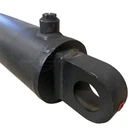



The cylinder bore size is a critical parameter in the design and performance of compactor cylinders. As a supplier of compactor cylinders, I have witnessed firsthand how the bore size can significantly influence the overall performance of these essential components. In this blog post, I will delve into the various aspects of how the cylinder bore size impacts the performance of compactor cylinders.
Force Generation
One of the most direct ways the cylinder bore size affects compactor cylinders is through force generation. The force exerted by a hydraulic cylinder is calculated using the formula F = P × A, where F is the force, P is the pressure, and A is the cross - sectional area of the piston. The cross - sectional area of the piston is determined by the bore size (A = π × (d/2)^2, where d is the bore diameter).
A larger bore size means a larger cross - sectional area of the piston. For a given hydraulic pressure, a cylinder with a larger bore will generate more force. In the context of compactor cylinders, this is crucial as they are often used to compress materials such as waste in garbage trucks. A higher force allows the compactor to compress the waste more effectively, reducing its volume and increasing the amount of waste that can be stored in the truck. For example, in a Dump Cylinder used in a garbage truck, a larger bore size can provide the necessary force to lift and dump heavy loads of compacted waste.
On the other hand, a smaller bore size will result in less force generation. However, smaller bore cylinders may be more suitable in applications where less force is required, or where space is limited. They can also be more energy - efficient in some cases, as they require less hydraulic fluid to operate.
Speed of Operation
The bore size also has an impact on the speed of operation of compactor cylinders. The speed of a hydraulic cylinder is related to the flow rate of the hydraulic fluid and the cross - sectional area of the piston. The formula for the speed of a cylinder is v = Q/A, where v is the speed, Q is the flow rate of the hydraulic fluid, and A is the cross - sectional area of the piston.
A smaller bore size means a smaller cross - sectional area of the piston. For a given flow rate of hydraulic fluid, a cylinder with a smaller bore will operate at a higher speed. This can be advantageous in applications where quick cycles are required, such as in some Packer Cylinder systems. The packer cylinder needs to move rapidly to compress the waste in a timely manner, and a smaller bore size can help achieve this.
Conversely, a larger bore size will result in a slower speed of operation for a given flow rate. But in applications where force is the primary concern, the slower speed may be an acceptable trade - off.
Power Requirements
The power requirements of compactor cylinders are closely related to both force and speed. Power is calculated as the product of force and speed (P = F × v). Since the bore size affects both force and speed, it also has a significant impact on power consumption.
Larger bore cylinders, which generate more force but operate at a slower speed, may require more power due to the high force they need to generate. The hydraulic pump needs to provide enough pressure to drive the larger piston, which can increase the power consumption of the system. However, in applications where the compaction process is relatively slow and high force is essential, the increased power consumption may be justifiable.
Smaller bore cylinders, with their higher speed and lower force, may have lower power requirements. They are more suitable for applications where the compaction process is less force - intensive and speed is more important.
Durability and Wear
The bore size can also influence the durability and wear of compactor cylinders. A larger bore size means a larger piston surface area in contact with the cylinder wall. This can lead to higher contact stresses and more wear over time. However, larger cylinders are often designed to handle these higher stresses, and they may have thicker walls and more robust seals.
Smaller bore cylinders generally have less contact area between the piston and the cylinder wall, which can result in lower wear. They may also be more forgiving in terms of misalignment and minor variations in the operating conditions. However, they may be more prone to damage from contaminants in the hydraulic fluid, as the smaller clearances can be more easily blocked.
Cost Considerations
Cost is an important factor in any engineering decision. The bore size of compactor cylinders can have a significant impact on the cost of the cylinders and the overall system.
Larger bore cylinders are typically more expensive to manufacture. They require more material for the cylinder body and piston, and the machining processes may be more complex. Additionally, the hydraulic pumps and valves needed to operate larger cylinders are often larger and more expensive. However, the increased performance in terms of force generation may justify the higher cost in applications where high - force compaction is required.
Smaller bore cylinders are generally less expensive to manufacture. They require less material and the machining processes are often simpler. The associated hydraulic components, such as pumps and valves, can also be smaller and less costly. This makes them a more cost - effective option for applications where lower force and higher speed are acceptable.
Applications and Bore Size Selection
The choice of bore size for compactor cylinders depends on the specific application. In waste management applications, Ejector Cylinders used to eject compacted waste from the truck may require a larger bore size to generate the necessary force to push out the heavy load. The Packer Cylinder, on the other hand, may benefit from a smaller bore size to achieve a faster cycling speed for efficient waste compression.
In industrial compaction applications, such as in the recycling of metal scraps, a larger bore size may be needed to provide the high force required to compress the dense materials. In food processing or pharmaceutical applications, where the compaction force requirements are lower, smaller bore cylinders may be more appropriate.


Conclusion
In conclusion, the cylinder bore size has a profound influence on the performance of compactor cylinders. It affects force generation, speed of operation, power requirements, durability, and cost. As a supplier of compactor cylinders, I understand the importance of selecting the right bore size for each application. Whether you need a high - force compaction solution or a fast - cycling system, we can provide the appropriate compactor cylinders to meet your needs.
If you are in the market for compactor cylinders and would like to discuss your specific requirements, I encourage you to reach out for a procurement discussion. Our team of experts is ready to assist you in selecting the best cylinder bore size and design for your application.
References
- Fluid Power Handbook, Parker Hannifin Corporation
- Hydraulic Cylinder Design and Application, Eaton Corporation
- Engineering Principles of Compaction Equipment, Caterpillar Inc.