




Hey there! As a supplier of telescopic cylinders, I often get asked about all sorts of technical details. One question that pops up quite a bit is, "What is the parallelism tolerance of a telescopic cylinder?" Well, let's dive right into it.
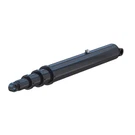
First off, let's understand what telescopic cylinders are. They're pretty cool pieces of machinery. Telescopic cylinders, also known as multistage cylinders, are designed to provide a long stroke from a relatively compact retracted length. You can check out more about Multistage Cylinders on our website. These cylinders are used in a wide range of applications, from construction equipment like dump trucks and forklifts to industrial machinery.
Now, onto parallelism tolerance. Parallelism tolerance is a measure of how closely the axis of one part of the telescopic cylinder aligns with another part. In simpler terms, it's about making sure that the different stages of the cylinder move in a straight line and don't deviate from the ideal path.
Why is parallelism tolerance so important? Well, think about it. If the stages of a telescopic cylinder don't move parallel to each other, it can cause a whole bunch of problems. For starters, it can lead to uneven wear on the cylinder components. The seals, for example, might get damaged more quickly because they're being subjected to uneven forces. This can result in leaks, which not only waste hydraulic fluid but can also lead to a loss of performance in the equipment.
Another issue is that poor parallelism can cause the cylinder to bind or jam. When the stages don't move smoothly, it can put extra stress on the hydraulic system, leading to increased energy consumption and potential damage to the pump and other components. In extreme cases, a jammed cylinder can even cause the equipment to malfunction, which can be dangerous in some applications.
So, how do we measure parallelism tolerance? There are a few different methods, but one common way is to use precision measuring tools like dial indicators. These tools can be used to measure the deviation of the cylinder's axis at different points along its length. The tolerance values are usually specified in thousandths of an inch or millimeters, depending on the industry standards and the specific requirements of the application.
The acceptable parallelism tolerance for a telescopic cylinder can vary depending on several factors. One of the main factors is the type of application. For example, in a high-precision industrial application where the cylinder needs to move very precisely, the tolerance might be extremely tight, perhaps within a few thousandths of an inch. On the other hand, in a less critical application like a simple lifting mechanism, a slightly looser tolerance might be acceptable.
The size and design of the cylinder also play a role. Larger cylinders generally have more room for error, so the tolerance might be a bit more forgiving. However, this doesn't mean that parallelism isn't important for larger cylinders. Even a small deviation can have a significant impact on the performance and longevity of the cylinder.
At our company, we take parallelism tolerance very seriously. We use state-of-the-art manufacturing processes and quality control measures to ensure that our telescopic cylinders meet the highest standards. Our team of experienced engineers and technicians carefully inspect each cylinder to make sure that the parallelism tolerance is within the specified range.
We offer a variety of telescopic cylinders to meet different customer needs. If you're looking for Single Acting Telescopic Cylinders, we've got you covered. These cylinders are great for applications where you only need the cylinder to extend under hydraulic pressure and retract under the force of gravity or an external load.
And if you need to replace an existing telescopic cylinder, we also have Replacement Telescopic Cylinders available. Our replacement cylinders are designed to fit perfectly and perform just as well as the original ones.
So, if you're in the market for telescopic cylinders and want to make sure you're getting high-quality products with the right parallelism tolerance, don't hesitate to get in touch with us. We're here to help you find the perfect solution for your application. Whether you're a small business owner or a large industrial manufacturer, we can work with you to meet your specific requirements.


In conclusion, parallelism tolerance is a crucial aspect of telescopic cylinder performance. By understanding what it is and why it matters, you can make more informed decisions when it comes to choosing and maintaining your cylinders. And if you have any questions or need more information, feel free to reach out. We're always happy to chat and help you find the best telescopic cylinders for your needs.
References
- Engineering textbooks on hydraulic systems
- Industry standards and guidelines for telescopic cylinders