




In the world of heavy machinery and industrial equipment, hydraulic piston systems play a crucial role. As a Hydraulic Piston supplier, I've witnessed firsthand the significance of these systems in various applications. But what exactly is the power source for a hydraulic piston system? This blog post aims to delve into this question, exploring the fundamental principles and components that drive these powerful systems.
Understanding Hydraulic Piston Systems
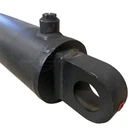
Before we dive into the power source, let's briefly understand what a hydraulic piston system is. A hydraulic piston system is a mechanical device that uses fluid pressure to generate linear motion. It consists of a cylinder, a piston, and hydraulic fluid. The piston moves back and forth inside the cylinder, driven by the pressure of the hydraulic fluid. This linear motion can be used to perform a variety of tasks, such as lifting heavy loads, moving machinery, or controlling the movement of vehicles.
The Power Source: Hydraulic Fluid
The primary power source for a hydraulic piston system is hydraulic fluid. Hydraulic fluid is a specially formulated liquid that is designed to transfer power efficiently and effectively. It has several important properties that make it ideal for use in hydraulic systems:


- Incompressibility: Hydraulic fluid is virtually incompressible, which means that it can transmit force without losing energy. When pressure is applied to the fluid, it transfers that force directly to the piston, causing it to move.
- Lubrication: Hydraulic fluid also serves as a lubricant, reducing friction between the moving parts of the system. This helps to prevent wear and tear, extending the lifespan of the components.
- Cooling: As the fluid circulates through the system, it absorbs heat generated by the moving parts. This helps to keep the system cool and prevent overheating.
Hydraulic Pumps: Generating Pressure
To create the pressure needed to move the piston, a hydraulic piston system relies on a hydraulic pump. The hydraulic pump is responsible for drawing in hydraulic fluid from a reservoir and then forcing it into the system at high pressure. There are several types of hydraulic pumps, each with its own unique design and operating principle. Some of the most common types include:
- Gear Pumps: Gear pumps are one of the simplest and most widely used types of hydraulic pumps. They consist of two meshing gears that rotate inside a housing. As the gears rotate, they create a vacuum that draws in hydraulic fluid from the reservoir. The fluid is then trapped between the teeth of the gears and forced out of the pump at high pressure.
- Vane Pumps: Vane pumps use a series of vanes that slide in and out of slots in a rotor. As the rotor rotates, the vanes create chambers that expand and contract, drawing in and expelling hydraulic fluid. Vane pumps are known for their smooth operation and high efficiency.
- Piston Pumps: Piston pumps are the most powerful and efficient type of hydraulic pumps. They use a series of pistons that move back and forth inside cylinders. As the pistons move, they create a pressure differential that forces hydraulic fluid into and out of the pump. Piston pumps are commonly used in high-pressure applications, such as heavy machinery and industrial equipment.
Control Valves: Regulating Flow and Pressure
In addition to the hydraulic pump, a hydraulic piston system also includes a series of control valves. These valves are used to regulate the flow and pressure of the hydraulic fluid, allowing the system to operate smoothly and efficiently. Some of the most common types of control valves include:
- Directional Control Valves: Directional control valves are used to control the direction of the hydraulic fluid flow. They can be used to move the piston in one direction or the other, or to stop the piston altogether.
- Pressure Control Valves: Pressure control valves are used to regulate the pressure of the hydraulic fluid. They can be used to maintain a constant pressure in the system, or to limit the pressure to a safe level.
- Flow Control Valves: Flow control valves are used to regulate the flow rate of the hydraulic fluid. They can be used to control the speed of the piston, or to ensure that the fluid flows at a constant rate.
Applications of Hydraulic Piston Systems
Hydraulic piston systems are used in a wide variety of applications, including:
- Construction Equipment: Hydraulic piston systems are commonly used in construction equipment, such as excavators, bulldozers, and cranes. They are used to power the lifting, digging, and pushing functions of these machines.
- Agricultural Equipment: Hydraulic piston systems are also used in agricultural equipment, such as tractors, combines, and harvesters. They are used to power the steering, lifting, and tilling functions of these machines.
- Automotive Industry: Hydraulic piston systems are used in the automotive industry to power the brakes, steering, and suspension systems of vehicles. They are also used in some high-performance vehicles to power the engine's supercharger or turbocharger.
- Industrial Machinery: Hydraulic piston systems are used in a variety of industrial machinery, such as presses, shears, and injection molding machines. They are used to power the movement of the machine's components, allowing it to perform its intended function.
Importance of Quality Hydraulic Components
As a Hydraulic Piston supplier, I understand the importance of using high-quality hydraulic components in a hydraulic piston system. The performance and reliability of the system depend on the quality of the components used. That's why we offer a wide range of Hydraulic Piston products that are designed to meet the highest standards of quality and performance. Our products are made from the finest materials and are manufactured using the latest technology and techniques.
Conclusion
In conclusion, the power source for a hydraulic piston system is hydraulic fluid, which is pressurized by a hydraulic pump. The pressure generated by the pump is then regulated by a series of control valves, allowing the system to operate smoothly and efficiently. Hydraulic piston systems are used in a wide variety of applications, from construction equipment to automotive vehicles. As a Hydraulic Piston supplier, we are committed to providing our customers with the highest quality products and services. If you are in the market for Snowplow Hydraulic Cylinders, Clevis Hydraulic Cylinders, or any other hydraulic components, please don't hesitate to contact us. We would be happy to discuss your needs and provide you with a quote.
References
- Fluid Power Handbook, edited by Peter A. Nachtwey
- Hydraulic System Design, by William B. Abernethy
- Introduction to Hydraulics and Pneumatics, by David A. MacKenzie