




In the intricate world of engine design, the relationship between piston rod length and engine stroke is a topic that warrants in - depth exploration. As a piston rod supplier, I've witnessed firsthand how these two elements interact to influence engine performance, efficiency, and durability.
Understanding the Basics: Piston Rod and Engine Stroke
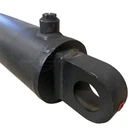
Let's start by defining our key terms. A Piston Rod is a crucial component in an engine. It connects the piston to the crankshaft, transmitting the force generated by the combustion process in the cylinder to the crankshaft, which then converts this linear motion into rotational motion. The piston rod is typically made from high - strength materials to withstand the extreme forces and stresses within the engine.
On the other hand, the engine stroke refers to the distance that the piston travels from the top - dead - center (TDC) to the bottom - dead - center (BDC) in the cylinder. It is a fundamental parameter in engine design that determines the engine's displacement, which is directly related to its power output and fuel consumption.
Mathematical Relationship
The relationship between piston rod length and engine stroke can be understood through a basic geometric analysis. The engine stroke (S) is directly related to the throw of the crankshaft. The throw of the crankshaft is half of the engine stroke, i.e., if the engine stroke is S, the crankshaft throw is S/2.
The motion of the piston is a complex combination of linear and rotational movements. The piston rod length (L) affects the position and motion of the piston within the cylinder. When the crankshaft rotates, the piston moves up and down in the cylinder. The ratio of the piston rod length to the crankshaft throw (L/(S/2)) has a significant impact on the piston's motion characteristics.
A longer piston rod relative to the crankshaft throw results in a more linear motion of the piston. This is because the longer rod reduces the angularity of the rod as the crankshaft rotates. When the angularity of the rod is small, the piston experiences less side - loading against the cylinder wall. Side - loading can cause increased friction, wear on the piston rings and cylinder walls, and can also lead to reduced engine efficiency.
Conversely, a shorter piston rod relative to the crankshaft throw increases the angularity of the rod during the crankshaft rotation. This causes the piston to have a more non - linear motion, with greater side - loading on the cylinder wall. While a shorter piston rod may allow for a more compact engine design, it often comes at the cost of increased wear and reduced efficiency.
Impact on Engine Performance
Power Output
The relationship between piston rod length and engine stroke can have a profound impact on engine power output. A well - designed combination of piston rod length and engine stroke can optimize the combustion process within the cylinder. When the piston moves in a more linear fashion (due to a longer piston rod), the combustion chamber shape remains more consistent during the compression and power strokes. This allows for more efficient combustion of the air - fuel mixture, resulting in increased power output.
In high - performance engines, such as those used in racing cars, engineers carefully select the piston rod length and engine stroke to maximize power. For example, a longer piston rod can help maintain a better seal between the piston and the cylinder wall during the power stroke, ensuring that more of the energy from the combustion process is transferred to the crankshaft.
Fuel Efficiency
Fuel efficiency is another important aspect affected by the piston rod length and engine stroke relationship. A more linear piston motion (associated with a longer piston rod) reduces friction within the engine. As friction is one of the main sources of energy loss in an engine, reducing it can lead to improved fuel efficiency.
When the piston experiences less side - loading, the piston rings can maintain a better seal against the cylinder wall. This reduces blow - by, which is the leakage of the air - fuel mixture past the piston rings into the crankcase. Blow - by not only wastes fuel but also can contaminate the engine oil, leading to reduced lubrication efficiency.
Engine Durability
The durability of an engine is closely related to the wear and tear on its components. A proper ratio of piston rod length to engine stroke can significantly improve engine durability. A longer piston rod reduces the side - loading on the piston and cylinder wall, which in turn reduces the wear on the piston rings, cylinder liners, and the piston itself.
In heavy - duty applications, such as Piston Pumps for Trucks, where engines are subjected to high loads and long operating hours, the choice of piston rod length and engine stroke is crucial. A well - designed combination can ensure that the engine components last longer, reducing maintenance costs and downtime.
Material Considerations for Piston Rods
As a piston rod supplier, I understand the importance of using the right materials for piston rods. The material of the piston rod must have high strength, good fatigue resistance, and excellent wear resistance. SRB Seamless Tube is often used in the manufacturing of piston rods.
SRB seamless tubes offer several advantages. They have a uniform structure, which provides consistent mechanical properties throughout the rod. This is important because the piston rod is subjected to cyclic loading, and any variation in material properties can lead to premature failure. Additionally, the seamless nature of the tube reduces the risk of cracks and other defects, ensuring a high - quality and reliable piston rod.


Practical Design Considerations
In real - world engine design, there are often trade - offs between different factors when choosing the piston rod length and engine stroke. For example, a longer piston rod may improve engine performance and durability, but it also increases the overall height of the engine, which may not be suitable for applications where space is limited.
Engine designers also need to consider the intended use of the engine. For a passenger car engine, fuel efficiency and smooth operation may be the primary concerns. In this case, a longer piston rod may be preferred to reduce friction and improve combustion efficiency. On the other hand, for a small - displacement engine in a motorcycle, a more compact design may be required, which may lead to the use of a shorter piston rod.
Conclusion
In conclusion, the relationship between piston rod length and engine stroke is a complex but crucial aspect of engine design. The ratio of piston rod length to engine stroke affects engine performance, fuel efficiency, and durability. As a piston rod supplier, I am committed to providing high - quality piston rods that are designed to work in harmony with different engine strokes.
If you are in the market for piston rods or have questions about the relationship between piston rod length and engine stroke, I encourage you to reach out to me for further discussion. We can work together to find the best solutions for your specific engine design needs. Whether you are involved in automotive, industrial, or other applications, our expertise in piston rod manufacturing can help you optimize your engine's performance.
References
- Taylor, C. F. (1985). The Internal - Combustion Engine in Theory and Practice. MIT Press.
- Heywood, J. B. (1988). Internal Combustion Engine Fundamentals. McGraw - Hill.
- Stone, R. (1999). Introduction to Internal Combustion Engines. Society of Automotive Engineers.