

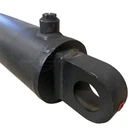

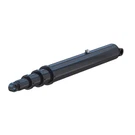


The rod diameter of a tailgate lift cylinder is a critical parameter that significantly impacts the performance, durability, and overall functionality of the cylinder. As a dedicated supplier of Tailgate Lift Cylinders, understanding the nuances of rod diameter is essential for providing our customers with the most suitable products for their specific needs.
Understanding the Basics of Tailgate Lift Cylinders
Tailgate lift cylinders are hydraulic components commonly used in garbage trucks and other heavy - duty vehicles. Their primary function is to lift and lower the tailgate, facilitating the loading and unloading of waste materials. These cylinders operate based on the principles of hydraulics, where pressurized fluid is used to generate force and motion.
The cylinder consists of two main parts: the barrel and the rod. The barrel is the stationary part that houses the hydraulic fluid, while the rod is the moving part that extends and retracts to perform the lifting action. The rod diameter, which refers to the thickness of the rod, plays a crucial role in determining the cylinder's capabilities.
Importance of Rod Diameter
Force and Load - Bearing Capacity
One of the most significant factors affected by the rod diameter is the cylinder's force - generating capacity. According to the basic principles of hydraulics, the force exerted by a hydraulic cylinder is calculated using the formula (F = P\times A), where (F) is the force, (P) is the pressure of the hydraulic fluid, and (A) is the cross - sectional area of the rod. A larger rod diameter means a larger cross - sectional area, which in turn allows the cylinder to generate more force.
In the context of tailgate lift cylinders, this is vital as they need to lift heavy tailgates and the waste materials they may contain. For example, in a large garbage truck with a heavy - duty tailgate, a cylinder with a larger rod diameter will be able to provide the necessary force to lift the tailgate smoothly and efficiently.
Stability and Durability
The rod diameter also influences the stability and durability of the tailgate lift cylinder. A thicker rod is less likely to bend or deform under heavy loads. When the rod diameter is too small for the application, it may experience excessive stress, leading to premature wear and failure. This can result in costly repairs and downtime for the vehicle.


Moreover, a larger rod diameter provides better resistance to side loads. In real - world applications, tailgate lift cylinders may be subjected to side forces due to uneven loading or misalignment. A rod with an appropriate diameter can withstand these side forces without compromising the cylinder's performance.
Factors Influencing the Choice of Rod Diameter
Application Requirements
The specific requirements of the application are the primary factor in determining the appropriate rod diameter. Different types of garbage trucks have different tailgate weights and lifting requirements. For smaller, residential garbage trucks, a relatively smaller rod diameter may be sufficient as the tailgates are lighter. On the other hand, large commercial or industrial garbage trucks with heavier tailgates and higher lifting loads will require cylinders with larger rod diameters.
Hydraulic System Pressure
The pressure of the hydraulic system also plays a role in choosing the rod diameter. Higher system pressures can generate more force with a smaller rod diameter. However, using a smaller rod diameter at high pressures may increase the risk of rod failure due to the increased stress on the rod. Therefore, a balance must be struck between the system pressure and the rod diameter to ensure optimal performance and safety.
Space Constraints
In some cases, space constraints within the vehicle can limit the choice of rod diameter. The design of the garbage truck may not allow for a large - diameter rod due to the available space around the tailgate area. In such situations, we, as suppliers, need to work closely with our customers to find a solution that meets their performance requirements while fitting within the space limitations.
Common Rod Diameters in Tailgate Lift Cylinders
In the market, common rod diameters for tailgate lift cylinders range from around 25mm to 100mm. Smaller diameters, such as 25mm - 50mm, are typically used in light - duty applications, such as small garbage trucks used for residential waste collection. These cylinders are designed to lift relatively light tailgates and are often part of a more compact hydraulic system.
For medium - duty applications, rod diameters in the range of 50mm - 75mm are commonly used. These cylinders can handle heavier tailgates and are suitable for larger garbage trucks used in commercial areas.
In heavy - duty applications, such as industrial garbage trucks or those used for handling large volumes of waste, rod diameters of 75mm - 100mm or even larger may be required. These cylinders are built to withstand high loads and provide the necessary force for smooth operation.
Related Hydraulic Cylinders
In addition to tailgate lift cylinders, there are other types of hydraulic cylinders used in garbage trucks, such as Ejector Cylinders and Dump Cylinders. Ejector cylinders are used to push the waste out of the truck body, while dump cylinders are responsible for tilting the truck body to unload the waste. Each of these cylinders also has specific requirements for rod diameter based on their functions and the loads they need to handle.
Conclusion
As a supplier of Tailgate Lift Cylinders, we understand the importance of choosing the right rod diameter for our customers' applications. The rod diameter affects the cylinder's force - generating capacity, stability, and durability. By considering factors such as application requirements, hydraulic system pressure, and space constraints, we can provide our customers with cylinders that offer optimal performance.
If you are in the market for tailgate lift cylinders or have any questions regarding rod diameter and its suitability for your specific needs, we encourage you to contact us for a detailed discussion. Our team of experts is ready to assist you in making the best choice for your garbage truck hydraulic system.
References
- Fluid Power Handbook, various editions
- Technical literature from hydraulic cylinder manufacturers
- Industry standards and guidelines for garbage truck hydraulic systems