

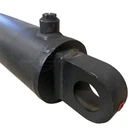

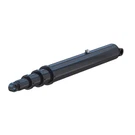


The compactor cylinder is a critical component in waste management and heavy - duty equipment, especially in garbage trucks. As a Compactor Cylinders supplier, I have in - depth knowledge of the various elements that make up these cylinders, and one of the most important parts is the rod. In this blog, I will explore the role of the rod in compactor cylinders.
1. Structural Support and Connection
The rod in a compactor cylinder serves as a crucial structural element. It connects the piston, which moves within the cylinder barrel, to the external component that needs to perform work, such as a compactor plate in a garbage truck. This connection allows the force generated by the hydraulic fluid acting on the piston to be transferred effectively to the load.
When the hydraulic system is activated, the pressure of the hydraulic fluid pushes the piston. The rod, firmly attached to the piston, then transmits this force to the compactor mechanism. Without a strong and properly designed rod, this force transfer would be inefficient or even impossible. For example, in a large - scale garbage compactor, the rod must be able to withstand high - magnitude forces as it pushes the compactor plate against a large volume of waste.


2. Force Transmission
The primary function of the rod in a compactor cylinder is to transmit the force generated by the hydraulic pressure. The hydraulic system in a compactor cylinder creates a pressure difference on either side of the piston. When the pressure on one side of the piston is greater, it causes the piston to move. The rod, being an extension of the piston, moves along with it and transfers the resulting force to the compaction surface.
The amount of force that the rod can transmit depends on several factors. Firstly, the cross - sectional area of the rod affects its strength. A larger cross - sectional area generally means that the rod can withstand and transmit greater forces. Secondly, the material of the rod is crucial. High - strength steel is commonly used for compactor cylinder rods because it can handle the high stresses involved in the compaction process. For instance, in a municipal garbage truck, the compactor cylinder rod needs to exert enough force to compress a large amount of waste into a smaller volume, and only a rod made of high - quality steel can meet this requirement.
3. Precision Movement Control
The rod also plays a vital role in controlling the movement of the compactor mechanism. In a compactor cylinder, the movement of the rod must be precise to ensure efficient compaction. The hydraulic system can be adjusted to control the speed and direction of the rod's movement.
For example, when the compactor is starting to compress waste, the rod may move slowly at first to gradually build up pressure. As the waste becomes more compacted, the speed of the rod's movement can be adjusted according to the requirements. This precision movement control is essential for preventing damage to the compactor components and for achieving optimal compaction results. In addition, the rod's movement needs to be linear and stable. Any deviation or wobbling of the rod can lead to uneven compaction and potential damage to the compactor cylinder and other related parts.
4. Sealing and Protection
The rod in a compactor cylinder is also involved in the sealing and protection of the hydraulic system. A series of seals are used around the rod to prevent the leakage of hydraulic fluid. These seals are designed to fit tightly around the rod while still allowing it to move smoothly.
The rod's surface finish is very important for the effectiveness of the seals. A smooth and polished rod surface reduces friction between the rod and the seals, which helps to prevent wear and tear of the seals. At the same time, the rod protects the internal components of the cylinder from external contaminants. In a garbage truck environment, there are many dust, dirt, and debris particles. The rod acts as a barrier, preventing these contaminants from entering the cylinder and causing damage to the hydraulic system.
5. Durability and Long - term Performance
As a Compactor Cylinders supplier, I understand the importance of the rod's durability. Compactor cylinders are often subjected to harsh operating conditions, including high pressures, frequent cycles of movement, and exposure to corrosive substances. The rod needs to be able to withstand these conditions over a long period.
Regular maintenance of the rod is necessary to ensure its long - term performance. This includes checking the rod's surface for signs of wear, corrosion, or damage. If any issues are detected, appropriate measures such as re - plating or replacement should be taken. By ensuring the durability of the rod, the overall lifespan of the compactor cylinder can be extended, reducing the frequency of replacements and maintenance costs for the end - users.
Related Products
In addition to Compactor Cylinders Compactor Cylinders, our company also offers other related hydraulic cylinders. For example, the Dump Cylinder Dump Cylinder is used to lift and tilt the garbage truck's body to empty the compacted waste. The Ejector Cylinders Ejector Cylinders are designed to push the waste out of the truck's container. These cylinders also have similar components and working principles, with the rods playing important roles in force transmission and movement control.
Conclusion
The rod in compactor cylinders is a multi - functional and indispensable component. It provides structural support, transmits force, controls movement, ensures sealing and protection, and contributes to the long - term durability of the compactor cylinder. As a Compactor Cylinders supplier, we are committed to providing high - quality rods and cylinders to meet the needs of our customers in the waste management and heavy - duty equipment industries.
If you are interested in our Compactor Cylinders or related products, we welcome you to contact us for procurement and negotiation. We are ready to offer you the best products and services to meet your specific requirements.
References
- "Hydraulic Cylinder Design and Application" by Tom Cellitti.
- Industry reports on waste management equipment and hydraulic systems.