

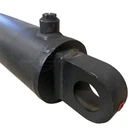

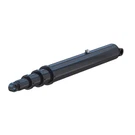


Hey there! As a supplier of Hydraulic Tilt Cylinders, I often get asked whether these bad boys are suitable for heavy-duty applications. Well, let's dive right in and break it down.
What Are Hydraulic Tilt Cylinders?
First off, for those who might not know, hydraulic tilt cylinders are essential components in a whole bunch of machinery. They use hydraulic fluid to generate linear motion, which is super useful for tilting, lifting, or adjusting parts of equipment. You can find them in a wide range of industries, from construction to agriculture.
In the agricultural world, Agricultural Hydraulic Cylinders play a crucial role. Tractors, harvesters, and other farming equipment rely on these cylinders to perform tasks like tilting plows, adjusting the angle of sprayers, and more. They're like the unsung heroes of the farm, quietly getting the job done day in and day out.


Heavy - Duty Requirements
Now, when we talk about heavy - duty applications, we're talking about some pretty tough jobs. These are the situations where equipment has to handle a lot of weight, high pressures, and continuous use. For example, in construction, excavators use hydraulic cylinders to lift heavy loads of dirt, rocks, and building materials. In mining, large trucks and loaders need cylinders that can withstand extreme forces and harsh environments.
So, what are the key requirements for a cylinder in a heavy - duty setting?
- Strength and Durability: The cylinder needs to be made of high - quality materials that can handle the stress and wear. For instance, steel is a popular choice because it's strong and can resist corrosion.
- High Pressure Resistance: Heavy - duty tasks often involve high hydraulic pressures. A good hydraulic tilt cylinder should be able to handle these pressures without leaking or failing.
- Precision and Control: Even in heavy - duty work, there's a need for precise movement. Whether it's tilting a large platform or adjusting the angle of a crane arm, the cylinder should allow for accurate control.
Are Hydraulic Tilt Cylinders Up to the Task?
The short answer is yes, hydraulic tilt cylinders are often very suitable for heavy - duty applications. Here's why:
Power and Force
Hydraulic systems are known for their ability to generate a lot of power. By using hydraulic fluid, a relatively small cylinder can produce a large amount of force. This means that even in heavy - duty situations where there's a lot of weight to move, a well - designed hydraulic tilt cylinder can get the job done.
For example, in a large industrial press, hydraulic tilt cylinders can apply a massive amount of force to shape metal or compress materials. The power generated by the hydraulic system allows for quick and efficient operation, even when dealing with thick and heavy workpieces.
Adaptability
Hydraulic tilt cylinders can be designed and customized to meet the specific needs of different heavy - duty applications. Whether it's a unique size, a special mounting configuration, or a specific operating pressure, manufacturers can tailor the cylinders to fit the requirements.
In the agricultural sector, Top Link Hydraulic Cylinders are often customized to work with different types of tractors and implements. They can be adjusted to provide the right amount of tilt and lift for various farming tasks, making them highly adaptable.
Reliability
When it comes to heavy - duty work, reliability is key. Hydraulic tilt cylinders are generally very reliable because they have fewer moving parts compared to some other types of actuators. This means there's less that can go wrong, and maintenance is often relatively straightforward.
For example, in a logging operation, a hydraulic tilt cylinder on a log loader needs to work consistently. If it fails, it can cause significant downtime and lost productivity. A well - built hydraulic tilt cylinder can provide the reliability needed to keep the operation running smoothly.
Case Studies
Let's take a look at some real - world examples of hydraulic tilt cylinders in heavy - duty applications.
Construction
In a large building project, a hydraulic tilt cylinder was used on a concrete pump truck. The cylinder was responsible for tilting the boom to reach different areas of the construction site. It had to handle the weight of the boom, the concrete pipeline, and the flowing concrete itself. Despite the heavy load and continuous use, the hydraulic tilt cylinder performed flawlessly, allowing for precise placement of the concrete.
Agriculture
On a large - scale farm, hydraulic tilt cylinders were installed on a multi - row planter. The cylinders were used to tilt the planter units to adjust for different soil conditions and planting depths. They had to work in a dusty and dirty environment, but thanks to their durable design and high - quality seals, they maintained their performance over a long growing season.
Challenges and Solutions
Of course, using hydraulic tilt cylinders in heavy - duty applications isn't without its challenges. One of the main issues is wear and tear. Over time, the seals in the cylinder can start to leak, and the piston rod can get damaged.
To address these problems, regular maintenance is crucial. This includes checking the hydraulic fluid levels, inspecting the seals for wear, and lubricating moving parts. Additionally, some manufacturers are now using advanced materials and coatings to improve the durability of the cylinders. For example, ceramic coatings can reduce friction and wear on the piston rod, extending the life of the cylinder.
Another challenge is heat generation. High - pressure hydraulic systems can generate a lot of heat, which can affect the performance of the cylinder and the hydraulic fluid. To combat this, some cylinders are equipped with cooling systems, such as fins or heat exchangers, to dissipate the heat.
Conclusion
In conclusion, hydraulic tilt cylinders are definitely suitable for heavy - duty applications. Their power, adaptability, and reliability make them a great choice for a wide range of industries. Whether it's construction, agriculture, mining, or any other heavy - duty field, these cylinders can handle the tough jobs.
If you're in the market for hydraulic tilt cylinders for your heavy - duty needs, we're here to help. We offer a wide range of high - quality Hydraulic Tilt Cylinders that are designed to meet the most demanding requirements. Our team of experts can work with you to find the perfect solution for your specific application. So, don't hesitate to get in touch and start a conversation about your procurement needs. Let's work together to get your heavy - duty equipment up and running at its best!
References
- "Hydraulic Cylinders: Design, Use, and Maintenance" by Industry Press
- "Agricultural Machinery Hydraulics" by Farm Tech Publications
- Construction Equipment Magazine articles on hydraulic systems