

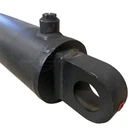



Hey there! As a supplier of Piston Pumps for Trucks, I often get asked whether these pumps need a flow control valve. It's a great question, and in this blog, I'll break down the ins and outs of this topic.
Let's start with the basics. A piston pump for trucks is a crucial component in a vehicle's hydraulic system. These pumps are designed to convert mechanical energy into hydraulic energy, which is then used to power various functions in the truck, like lifting heavy loads, operating brakes, or steering mechanisms. They work by using pistons that move back and forth within cylinders to create pressure and flow of hydraulic fluid.
Now, the role of a flow control valve. A flow control valve is a device that regulates the flow rate of a fluid in a hydraulic system. It can either increase or decrease the amount of fluid that passes through it, depending on the requirements of the system. So, do piston pumps for trucks need one? Well, it depends on several factors.
The Case for Using a Flow Control Valve
One of the main reasons to use a flow control valve with a piston pump for trucks is to ensure precise control of the hydraulic system. In many truck applications, you need to control the speed and force of the hydraulic actuators accurately. For example, when a truck is using a hydraulic lift to raise a heavy load, you don't want the lift to go up too fast or too slow. A flow control valve allows you to adjust the flow rate of the hydraulic fluid, which in turn controls the speed of the actuator.
Another advantage is energy efficiency. By regulating the flow of hydraulic fluid, a flow control valve can prevent the pump from working harder than necessary. This means less energy is wasted, and the overall fuel consumption of the truck can be reduced. In today's world, where fuel costs are a significant concern for truck operators, any measure to improve energy efficiency is a big plus.
Flow control valves also help in protecting the hydraulic system. They can prevent over - pressurization and excessive flow, which can damage the pump, hoses, and other components. For instance, if the flow rate is too high, it can cause cavitation in the pump, which is a phenomenon where vapor bubbles form and collapse in the fluid, leading to damage to the pump's internal parts. A flow control valve can keep the flow rate within a safe range, extending the lifespan of the entire hydraulic system.
Situations Where a Flow Control Valve May Not Be Necessary
However, there are also situations where a flow control valve may not be essential. In some simple truck applications where the hydraulic system has a fixed and predictable load, the piston pump may be able to operate effectively without a flow control valve. For example, if a truck is using a hydraulic system to perform a single, repetitive task with a constant load, like opening and closing a small hatch, the pump can be sized correctly to provide the required flow and pressure without the need for additional flow regulation.
Another factor is cost. Flow control valves add to the overall cost of the hydraulic system, both in terms of the initial purchase price and the cost of installation and maintenance. In some cases, especially for budget - conscious truck owners or operators of older trucks, the added expense of a flow control valve may not be justified.
Components Related to Piston Pumps for Trucks
When considering the use of a piston pump for trucks, it's also important to look at other related components. For example, SRB Seamless Tube is a critical part of the hydraulic system. These tubes are used to transport the hydraulic fluid from the pump to the actuators. They need to be strong and reliable to withstand the high pressures generated by the piston pump.
The Piston Rod is another key component. It is connected to the piston inside the pump and transfers the mechanical force to create the pumping action. A high - quality piston rod ensures smooth and efficient operation of the piston pump.
Making the Decision
So, how do you decide whether your piston pump for trucks needs a flow control valve? First, you need to consider the specific application of the truck. If the hydraulic system requires precise control, energy efficiency, and protection from over - pressurization, then a flow control valve is a good investment. On the other hand, if the application is simple and cost is a major concern, you may be able to get by without one.


It's also a good idea to consult with a hydraulic system expert. They can assess your truck's hydraulic requirements and help you make an informed decision. At our company, we have a team of experienced professionals who can provide you with personalized advice based on your specific needs.
Conclusion
In conclusion, while piston pumps for trucks can operate without a flow control valve in some situations, there are many benefits to using one. Precise control, energy efficiency, and system protection are all compelling reasons to consider adding a flow control valve to your truck's hydraulic system. If you're in the market for piston pumps for trucks or need advice on whether a flow control valve is right for you, don't hesitate to reach out. We're here to help you make the best choice for your truck's hydraulic needs. Whether you're a small - scale truck operator or a large - fleet manager, we can provide you with high - quality products and expert guidance.
If you have any questions or are interested in purchasing piston pumps for trucks or related components, feel free to contact us. We look forward to working with you to optimize your truck's hydraulic system.
References
- "Hydraulic Systems Handbook" by John F. Caruthers
- "Practical Hydraulics and Pneumatics" by David A. Cox