

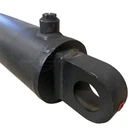



Telescopic cylinders are essential components in various industries, including construction, agriculture, and material handling. Their ability to provide a long stroke in a compact retracted length makes them highly versatile. As a supplier of telescopic cylinders, I often encounter questions about how different factors, such as the diameter, affect their performance. In this blog post, I will delve into the relationship between the diameter of a telescopic cylinder and its performance.
Force Output
One of the most significant ways the diameter of a telescopic cylinder impacts its performance is through the force output. The force exerted by a hydraulic cylinder is calculated using the formula F = P × A, where F is the force, P is the pressure, and A is the cross - sectional area of the piston. The cross - sectional area of a piston is determined by the formula A = π × (d/2)^2, where d is the diameter of the piston.
As the diameter of the telescopic cylinder increases, the cross - sectional area of the piston also increases. For a given hydraulic pressure, a larger cross - sectional area will result in a greater force output. This means that cylinders with larger diameters can handle heavier loads. For example, in a construction application where a telescopic cylinder is used to lift heavy building materials, a larger diameter cylinder can provide the necessary force to lift these materials more efficiently.
However, it's important to note that increasing the diameter also has implications for the overall system. A larger diameter cylinder requires more hydraulic fluid to operate, which may necessitate a larger hydraulic pump and reservoir. This can increase the cost and complexity of the hydraulic system.
Speed of Operation
The diameter of a telescopic cylinder also affects its speed of operation. The speed of a hydraulic cylinder is determined by the flow rate of the hydraulic fluid and the cross - sectional area of the piston. The formula for the speed of a cylinder is v = Q/A, where v is the speed, Q is the flow rate of the hydraulic fluid, and A is the cross - sectional area of the piston.
As the diameter of the cylinder increases, the cross - sectional area of the piston increases. For a given flow rate of hydraulic fluid, a larger cross - sectional area will result in a slower speed of operation. In applications where speed is crucial, such as in a high - speed material handling system, a smaller diameter cylinder may be more appropriate.
On the other hand, in applications where force is the primary concern and speed is less critical, a larger diameter cylinder can be used. For instance, in a waste compactor, the cylinder needs to apply a large amount of force to compress the waste, and a slower speed of operation is acceptable.
Stability and Precision
The diameter of a telescopic cylinder can also impact its stability and precision. A larger diameter cylinder generally provides more stability. This is because the larger piston area distributes the load more evenly, reducing the risk of the cylinder buckling under heavy loads. In applications where stability is essential, such as in a crane or a forklift, a larger diameter telescopic cylinder can enhance the overall safety and performance of the equipment.
In terms of precision, a larger diameter cylinder may be less precise compared to a smaller one. This is because the larger piston area requires more hydraulic fluid to move, which can lead to more significant fluid compressibility effects. In applications where high precision is required, such as in a robotic arm, a smaller diameter cylinder may be a better choice.


Durability and Wear
The diameter of a telescopic cylinder can influence its durability and wear characteristics. A larger diameter cylinder can generally withstand more wear and tear. This is because the larger piston and cylinder walls can distribute the load over a larger surface area, reducing the stress on individual components.
In addition, larger diameter cylinders often have thicker walls, which can provide better resistance to external forces and damage. For example, in a mining application where the telescopic cylinder is exposed to harsh conditions and potential impacts, a larger diameter cylinder is more likely to withstand these challenges and have a longer service life.
However, larger diameter cylinders may also be more difficult to repair. The larger components can be heavier and more challenging to handle, and the replacement parts may be more expensive.
Applications and Considerations
The choice of the diameter of a telescopic cylinder depends on the specific application. For applications that require high force, such as heavy - duty lifting and pressing, larger diameter cylinders are often the best choice. On the other hand, for applications that require high speed and precision, smaller diameter cylinders are more suitable.
If you are looking for Pin Mount Telescopic Cylinders, you can visit Pin Mount Telescopic Cylinders. These cylinders are designed for specific mounting requirements and can offer reliable performance in various applications.
For those in need of Replacement Telescopic Cylinders, Replacement Telescopic Cylinders provide a cost - effective solution to keep your equipment running smoothly.
Our FE 169 - 5 - 5405 Telescopic Hydraulic Cylinders are a popular choice for many industrial applications. They are engineered to meet high - quality standards and offer excellent performance.
Conclusion
In conclusion, the diameter of a telescopic cylinder has a significant impact on its performance, including force output, speed of operation, stability, precision, durability, and wear. When selecting a telescopic cylinder, it's crucial to consider the specific requirements of your application. As a supplier of telescopic cylinders, we can provide you with expert advice and high - quality products to meet your needs. If you are interested in purchasing telescopic cylinders or have any questions about our products, please contact us for a detailed discussion. We look forward to working with you to find the best solution for your application.
References
- Fluid Power Handbook, edited by the National Fluid Power Association.
- Hydraulic Cylinder Design and Application Guide, published by a leading hydraulic equipment manufacturer.