

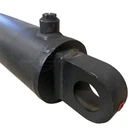



Hey there! As a supplier of agricultural cylinders, I've seen firsthand how crucial it is to have these components working at their best. One of the key aspects of maintaining agricultural cylinders is adjusting their stroke correctly. In this blog, I'm gonna share some tips on how to adjust the stroke of agricultural cylinders.
First off, let's understand what the stroke of an agricultural cylinder is. The stroke is the distance the piston rod moves inside the cylinder from its fully retracted position to its fully extended position. It's an important parameter because it determines how much work the cylinder can do. For example, in a plow, the stroke of the cylinder affects how deep the plow can dig into the soil.
Now, why would you need to adjust the stroke? Well, there are a few reasons. Maybe you've changed the equipment that the cylinder is attached to, and the old stroke isn't suitable anymore. Or perhaps the cylinder has been in use for a long time, and wear and tear have caused the stroke to deviate from the optimal value. Whatever the reason, adjusting the stroke can improve the performance and efficiency of your agricultural machinery.
Tools You'll Need
Before you start adjusting the stroke, you'll need a few tools. These include a set of wrenches, a measuring tape or caliper, and a hydraulic pressure gauge. The wrenches are used to loosen and tighten the nuts and bolts on the cylinder. The measuring tape or caliper is used to measure the stroke accurately, and the hydraulic pressure gauge helps you monitor the pressure inside the cylinder during the adjustment process.
Step-by-Step Guide to Adjusting the Stroke
Step 1: Safety First
Before you do anything, make sure the machinery is turned off and the hydraulic system is depressurized. This will prevent any accidental movement of the cylinder and protect you from potential injuries.
Step 2: Locate the Adjustment Mechanism
Most agricultural cylinders have an adjustment mechanism, which can be either a threaded rod or a locking nut. The adjustment mechanism is usually located at the end of the cylinder where the piston rod exits. Refer to the manufacturer's manual to find the exact location of the adjustment mechanism for your specific cylinder.
Step 3: Measure the Current Stroke
Use the measuring tape or caliper to measure the current stroke of the cylinder. Measure the distance from the end of the piston rod when it's fully retracted to the end of the piston rod when it's fully extended. Write down this measurement for reference.
Step 4: Make the Adjustment
If you need to increase the stroke, loosen the locking nut or turn the threaded rod counterclockwise. If you need to decrease the stroke, tighten the locking nut or turn the threaded rod clockwise. Make small adjustments at a time, and measure the stroke after each adjustment to ensure you're getting the desired result.
Step 5: Check the Hydraulic Pressure
Once you've made the adjustment, use the hydraulic pressure gauge to check the pressure inside the cylinder. The pressure should be within the recommended range specified by the manufacturer. If the pressure is too high or too low, you may need to make further adjustments to the stroke or the hydraulic system.
Step 6: Test the Cylinder
After you've adjusted the stroke and checked the hydraulic pressure, test the cylinder to make sure it's working properly. Operate the machinery and observe the movement of the cylinder. The piston rod should move smoothly and reach the desired stroke without any issues.
Types of Agricultural Cylinders and Their Stroke Adjustment
There are different types of agricultural cylinders, and each type may have slightly different stroke adjustment procedures. Let's take a look at some common types:
Agricultural Hydraulic Cylinders
Agricultural Hydraulic Cylinders are widely used in various agricultural applications, such as tractors, combines, and harvesters. These cylinders are usually adjusted by turning a threaded rod or adjusting a locking nut. Make sure to follow the manufacturer's instructions carefully when adjusting the stroke of these cylinders.
Hydraulic Tilt Cylinders
Hydraulic Tilt Cylinders are used to tilt agricultural equipment, such as plows and cultivators. The stroke adjustment of these cylinders is similar to that of other hydraulic cylinders. However, you need to pay special attention to the angle of tilt and make sure the cylinder is adjusted to achieve the desired tilt angle.
Top Link Hydraulic Cylinders
Top Link Hydraulic Cylinders are used to adjust the height and angle of the top link on agricultural implements. When adjusting the stroke of these cylinders, you need to consider the position of the implement and make sure the cylinder is adjusted to provide the correct height and angle.


Troubleshooting Tips
Sometimes, you may encounter problems during the stroke adjustment process. Here are some common issues and their solutions:
- Difficulty turning the adjustment mechanism: This could be due to corrosion or dirt on the adjustment mechanism. Try cleaning the mechanism with a wire brush and lubricating it with a suitable lubricant.
- Inconsistent stroke measurement: This could be caused by a loose or damaged measuring tool. Make sure the measuring tool is properly calibrated and securely attached to the piston rod.
- Hydraulic pressure issues: If the hydraulic pressure is too high or too low, check the hydraulic system for leaks, blockages, or other problems. You may need to consult a professional hydraulic technician for further diagnosis and repair.
Conclusion
Adjusting the stroke of agricultural cylinders is an important maintenance task that can improve the performance and efficiency of your agricultural machinery. By following the steps outlined in this blog and using the right tools, you can easily adjust the stroke of your cylinders and keep them working at their best.
If you're in the market for high-quality agricultural cylinders or need more information on stroke adjustment, feel free to reach out to us. We're here to help you find the right solutions for your agricultural needs.
References
- Manufacturer's manuals for agricultural cylinders
- Industry standards and best practices for hydraulic cylinder maintenance