

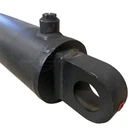



When it comes to die - casting machines, ejector cylinders play a crucial role in the overall operation. As a dedicated ejector cylinders supplier, I understand the significance of making the right choice. In this blog, I will share some key factors to consider when selecting ejector cylinders for a die - casting machine.
1. Understanding the Basics of Ejector Cylinders in Die - Casting
Ejector cylinders are responsible for pushing the cast part out of the die cavity after the casting process is complete. They are a vital component that affects the quality and efficiency of the die - casting operation. A well - chosen ejector cylinder can ensure smooth ejection, reduce the risk of part damage, and increase the productivity of the die - casting machine.
Force Requirements
One of the primary considerations is the force required to eject the cast part. The force depends on several factors, such as the size and shape of the part, the material being cast, and the friction between the part and the die. For larger and more complex parts, a higher - force ejector cylinder is needed. To calculate the required force, you can use the following formula:
[F = p\times A]
where (F) is the force, (p) is the pressure, and (A) is the cross - sectional area of the piston. You need to determine the appropriate pressure based on the characteristics of the die - casting process and then select a cylinder with a piston area that can generate the necessary force.
Stroke Length
The stroke length of the ejector cylinder is another important factor. It should be long enough to fully eject the cast part from the die cavity. If the stroke length is too short, the part may not be completely ejected, leading to production delays and potential damage to the die. On the other hand, an overly long stroke length can increase the cost and complexity of the system. You need to measure the distance from the initial position of the ejector pins to the point where the part is fully ejected and choose a cylinder with a suitable stroke length.
2. Compatibility with the Die - Casting Machine
Mounting Style
Ejector cylinders need to be properly mounted on the die - casting machine. Different machines may have different mounting requirements, such as flange - mounted, foot - mounted, or tie - rod - mounted cylinders. You must ensure that the mounting style of the ejector cylinder is compatible with the machine. This will ensure a stable and secure installation, preventing any vibrations or misalignments that could affect the performance of the cylinder.
Hydraulic System Compatibility
Most die - casting machines use hydraulic systems to power the ejector cylinders. The ejector cylinder you choose must be compatible with the hydraulic system of the machine. This includes factors such as the operating pressure, flow rate, and oil viscosity. If the cylinder is not compatible with the hydraulic system, it may not function properly, leading to reduced efficiency and potential damage to the cylinder or the hydraulic system. You should consult the machine's manual or a hydraulic expert to determine the appropriate specifications for the ejector cylinder.


3. Quality and Reliability
Material and Construction
The quality of the materials used in the construction of the ejector cylinder is crucial for its reliability and durability. High - quality materials, such as hardened steel for the piston rod and corrosion - resistant materials for the cylinder body, can withstand the harsh conditions of the die - casting environment. The manufacturing process also plays a significant role. Precision machining and proper heat treatment can ensure the dimensional accuracy and strength of the cylinder.
Sealing Technology
Effective sealing is essential to prevent hydraulic fluid leakage and maintain the performance of the ejector cylinder. Advanced sealing technologies, such as lip seals and O - rings, can provide a reliable seal even under high - pressure and high - temperature conditions. You should choose a cylinder with high - quality seals to minimize the risk of leakage and ensure long - term operation.
4. Cost - Effectiveness
Initial Cost
When choosing an ejector cylinder, the initial cost is an important consideration. However, it should not be the only factor. A cheaper cylinder may seem like a good option at first, but it may have lower quality and reliability, leading to higher maintenance costs and production downtime in the long run. You need to balance the initial cost with the expected performance and lifespan of the cylinder.
Operating and Maintenance Costs
In addition to the initial cost, you also need to consider the operating and maintenance costs. A high - quality ejector cylinder may have a higher initial cost but lower operating and maintenance costs. For example, a cylinder with better sealing technology may require less frequent replacement of seals, reducing the maintenance time and cost. You should also consider the energy consumption of the cylinder, as a more efficient cylinder can save energy and reduce operating costs.
5. Additional Considerations
Speed Control
In some die - casting applications, speed control of the ejector cylinder is necessary. This can be achieved through the use of flow control valves or servo - controlled hydraulic systems. Speed control allows for a more precise ejection process, which can improve the quality of the cast parts.
Safety Features
Safety is always a top priority in any industrial operation. Ejector cylinders should have appropriate safety features, such as pressure relief valves and limit switches. Pressure relief valves can prevent over - pressurization of the cylinder, while limit switches can ensure that the cylinder stops at the correct position, preventing damage to the die and the machine.
Conclusion
Choosing the right ejector cylinders for a die - casting machine is a complex process that requires careful consideration of multiple factors. As an ejector cylinders supplier, I can provide you with high - quality cylinders that meet your specific requirements. Whether you need a Dump Cylinder, Tailgate Lift Cylinder, or Packer Cylinder for other applications, I have the expertise and products to serve you.
If you are interested in purchasing ejector cylinders or have any questions about the selection process, please feel free to contact me. I am always ready to assist you in making the best choice for your die - casting operation.
References
- Die - Casting Handbook, John Wiley & Sons
- Hydraulic Systems Design and Analysis, McGraw - Hill
- Industrial Cylinder Technology, ASME Press