




Hey there! As a supplier of Packer Cylinders, I've been in the game for quite a while, and I know how important it is to measure the performance of these crucial components. In this blog, I'll share with you some practical ways to do just that.
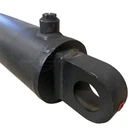
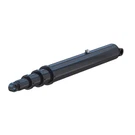
First off, let's understand what a Packer Cylinder is. It's a key part in many waste management and industrial applications. It's responsible for pushing, compacting, or moving materials efficiently. Whether it's in a garbage truck or an industrial compactor, the performance of the Packer Cylinder can make or break the whole operation.
Pressure Testing
One of the most basic yet essential ways to measure the performance of a Packer Cylinder is through pressure testing. You see, the cylinder operates based on hydraulic pressure. If the pressure is too low, it won't be able to do its job properly. On the other hand, if the pressure is too high, it can cause damage to the cylinder and other related parts.
To conduct a pressure test, you'll need a pressure gauge. Connect the gauge to the hydraulic system of the Packer Cylinder. Start the system and gradually increase the pressure to the recommended operating level. Observe the gauge readings. If the pressure fluctuates a lot or doesn't reach the desired level, there might be a problem. Maybe there's a leak in the hydraulic lines or a malfunction in the pump.
Stroke Length Measurement
The stroke length of a Packer Cylinder is another important factor. It refers to the distance the piston inside the cylinder can travel. A proper stroke length ensures that the cylinder can move the materials as required.
You can measure the stroke length using a measuring tape or a caliper. First, make sure the cylinder is in its fully retracted position. Mark the position of the piston rod. Then, extend the cylinder to its full length and mark the new position of the rod. Measure the distance between the two marks. This is your stroke length. Compare it with the manufacturer's specifications. If it's shorter or longer than expected, it could indicate issues like worn-out seals or a bent piston rod.
Force Output Assessment
The force output of a Packer Cylinder determines how effectively it can push or compact materials. To assess the force output, you can use a load cell. A load cell is a device that measures force.
Attach the load cell to the end of the piston rod. As the cylinder extends, the load cell will measure the force exerted by the cylinder. Compare the measured force with the rated force of the cylinder. If the force is significantly lower, it might be due to a decrease in hydraulic pressure, a damaged cylinder wall, or a problem with the internal components.
Speed and Cycle Time Analysis
The speed at which the Packer Cylinder operates and its cycle time are also crucial for overall performance. Cycle time refers to the time it takes for the cylinder to complete one full extension and retraction cycle.
You can use a stopwatch to measure the cycle time. Start the stopwatch when the cylinder begins to extend and stop it when it fully retracts. Do this several times and calculate the average cycle time. If the cycle time is too long, it could slow down the entire operation. This might be caused by a slow hydraulic pump, a blockage in the hydraulic lines, or excessive friction inside the cylinder.
Leakage Inspection
Leakage is a common problem in Packer Cylinders, and it can seriously affect performance. Check for any signs of hydraulic fluid leakage around the cylinder. Look for wet spots, drips, or puddles of fluid. You can also use a dye penetrant test to detect small leaks that might not be visible to the naked eye.


If you find a leak, it could be due to worn-out seals, damaged O-rings, or a cracked cylinder body. Replace the faulty components as soon as possible to prevent further damage and ensure optimal performance.
Comparing with Similar Cylinders
Another useful way to measure the performance of your Packer Cylinder is to compare it with similar cylinders in the market. For example, you can look at the performance of Dump Cylinder, Tailgate Lift Cylinder, and Compactor Cylinders. See how your cylinder stacks up in terms of pressure, force output, speed, and other performance metrics. This can give you an idea of whether your cylinder is performing at an industry-standard level.
Monitoring and Maintenance
Regular monitoring of the Packer Cylinder's performance is essential. Keep a record of the pressure readings, stroke lengths, force outputs, cycle times, and any signs of leakage over time. This data can help you identify trends and detect potential problems early on.
In addition to monitoring, proper maintenance is key. Follow the manufacturer's recommended maintenance schedule. This might include changing the hydraulic fluid, replacing seals and O-rings, and lubricating the moving parts. By taking good care of your Packer Cylinder, you can ensure its long-term performance and reliability.
Conclusion
Measuring the performance of a Packer Cylinder is a multi-faceted process. By conducting pressure tests, measuring stroke length, assessing force output, analyzing speed and cycle time, inspecting for leakage, comparing with similar cylinders, and implementing regular monitoring and maintenance, you can ensure that your Packer Cylinder is operating at its best.
If you're in the market for high-quality Packer Cylinders or need more information on how to optimize their performance, don't hesitate to reach out for a procurement discussion. We're here to help you make the right choices for your waste management or industrial needs.
References
- Hydraulic Cylinder Handbook, various authors
- Industrial Waste Management Best Practices, industry research reports