

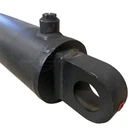



As a seasoned provider of agricultural cylinders, I've witnessed firsthand the ever - evolving needs of the agricultural sector. One of the most frequently asked questions involves the differences between hydraulic and pneumatic agricultural cylinders. In this blog post, I'll delve into the unique features, advantages, and applications of both types, helping you make an informed decision when choosing the right cylinders for your agricultural machinery.
Operating Medium
The most fundamental difference between hydraulic and pneumatic cylinders lies in their operating medium. Hydraulic cylinders use a liquid, typically hydraulic fluid, to generate power. This fluid is incompressible, which means that it can transmit force very efficiently without significant loss. When pressure is applied to the hydraulic fluid in the cylinder, it forces the piston to move, creating linear motion.
On the other hand, pneumatic cylinders use compressed air as their operating medium. Air is compressible, which gives pneumatic systems a certain degree of flexibility. Compressed air can be easily stored in tanks and transported through pipes, making it a convenient option for many applications.
Force and Power Output
Hydraulic cylinders are known for their high force and power output. Due to the incompressibility of the hydraulic fluid, hydraulic systems can generate extremely high pressures. This allows hydraulic agricultural cylinders to handle heavy - duty tasks such as lifting large loads, operating heavy implements, and providing the force needed for tilling and harvesting equipment. For example, in large - scale tractor hydraulic systems, hydraulic cylinders can exert thousands of pounds of force to lift and lower heavy plows or trailers.
In contrast, pneumatic cylinders generally have lower force and power output compared to hydraulic cylinders. The compressibility of air limits the maximum pressure that can be achieved in a pneumatic system. Pneumatic cylinders are better suited for lighter - duty applications such as operating small valves, actuating simple mechanical linkages, or providing quick, short - stroke movements.
Precision and Control
When it comes to precision and control, hydraulic cylinders have a distinct advantage. The incompressible nature of the hydraulic fluid allows for precise control of the piston's movement. Hydraulic systems can be easily adjusted to provide smooth, accurate, and repeatable motion. This is crucial in agricultural applications where precise control is required, such as in the operation of seeders or sprayers. The ability to control the speed and position of the cylinder with high accuracy ensures that the agricultural tasks are performed efficiently and effectively.
Pneumatic cylinders, while they can provide a certain level of control, are generally less precise than hydraulic cylinders. The compressibility of air makes it more difficult to achieve the same level of fine - tuned control. Pneumatic systems are more suitable for applications where approximate positioning and rapid action are sufficient.
Speed of Operation
Pneumatic cylinders are known for their fast operation. Compressed air can be quickly released and applied, allowing pneumatic cylinders to achieve rapid actuation and high - speed movements. This makes them ideal for applications where quick, repetitive actions are required, such as in automated sorting systems or packaging machinery in the agricultural processing industry.
Hydraulic cylinders, on the other hand, have a relatively slower speed of operation. The relatively high viscosity of hydraulic fluid and the need to build up pressure in the system result in slower actuation times compared to pneumatic cylinders. However, the slower speed is often compensated by the high force output and precision control.
Environmental Considerations
Hydraulic systems require the use of hydraulic fluid, which can pose environmental risks if it leaks. Hydraulic fluid spills can contaminate soil and water sources, and disposing of used hydraulic fluid needs to be done in an environmentally responsible manner. However, modern hydraulic systems are designed with improved sealing technologies to minimize the risk of leaks.
Pneumatic systems are generally more environmentally friendly. Since they use air as the operating medium, there is no risk of fluid spills. Compressed air is a clean and readily available resource, making pneumatic cylinders a more sustainable option in many cases.
Maintenance Requirements
Hydraulic cylinders require more intensive maintenance compared to pneumatic cylinders. The hydraulic fluid needs to be regularly checked and changed to ensure the proper functioning of the system. Filters in the hydraulic system also need to be replaced periodically to prevent contamination of the fluid. Additionally, hydraulic seals need to be inspected and replaced as needed to prevent leaks.
Pneumatic cylinders have relatively lower maintenance requirements. Since they use air, there is no need for fluid changes. However, the air compressors in pneumatic systems need to be maintained to ensure proper air supply. This includes regular cleaning of air filters and checking for proper lubrication in the compressor.
Applications in Agriculture
Hydraulic cylinders are widely used in various agricultural applications. They are commonly found in tractors, where they are used to operate implements such as loaders, backhoes, and plows. Agricultural Hydraulic Cylinders are also used in combine harvesters to control the cutting and threshing mechanisms. Tie Rod Hydraulic Cylinder is a popular type of hydraulic cylinder in agriculture, known for its durability and ease of installation.


Pneumatic cylinders are used in applications where fast and light - duty operations are required. They can be found in agricultural packaging systems, such as in the filling of grain bags or the operation of conveyor belt diverters. Top Link Hydraulic Cylinders are sometimes used in combination with pneumatic systems to provide support and control in specific agricultural setups.
Cost Considerations
Initial investment costs for hydraulic systems are generally higher than those for pneumatic systems. Hydraulic components, such as pumps, valves, and cylinders, are more expensive due to their higher precision and heavy - duty construction. Additionally, the cost of hydraulic fluid and the need for proper filtration and storage add to the overall cost.
Pneumatic systems are more cost - effective in terms of initial investment. Compressed air generation equipment and pneumatic cylinders are relatively inexpensive. However, the long - term energy costs of operating air compressors in pneumatic systems can be significant, especially if the system is used continuously.
Making the Right Choice
When choosing between hydraulic and pneumatic agricultural cylinders, you need to consider the specific requirements of your application. If you need high force, precise control, and are willing to invest in a more complex and expensive system, hydraulic cylinders are the way to go. On the other hand, if you require fast, light - duty operations, and want a more cost - effective and environmentally friendly option, pneumatic cylinders may be the better choice.
As an agricultural cylinders provider, I'm here to help you navigate through these options. Whether you're looking to upgrade your existing agricultural machinery or building a new system from scratch, I can offer you expert advice and high - quality products. Contact me to start a discussion about your specific needs, and let's work together to find the perfect agricultural cylinders for your operations.
References
- Bosch Rexroth, "Hydraulic and Pneumatic Systems Handbook"
- Parker Hannifin Corporation, "Technical Guide for Agricultural Cylinders"
- Emerson, "Comparing Hydraulic and Pneumatic Technologies"