

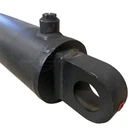



What are the factors that affect the precision of welded cylinders?
As a supplier of welded cylinders, I've witnessed firsthand how precision is the cornerstone of these essential components. Welded cylinders are used in a wide range of industries, from construction to manufacturing, and their precision can significantly impact the performance and safety of the equipment they're part of. In this blog, I'll explore the key factors that affect the precision of welded cylinders and how we, as a supplier, address these challenges to deliver high - quality products.
Material Quality
The quality of the materials used in welded cylinders is fundamental to their precision. The cylinder barrel, piston rod, and end caps are typically made from metals such as steel or aluminum. The chemical composition and mechanical properties of these materials can vary, which directly affects the dimensional stability and durability of the cylinder.
For instance, if the steel used for the cylinder barrel has inconsistent hardness, it may deform unevenly during the welding and machining processes. This can lead to out - of - tolerance dimensions, such as ovality in the barrel or misaligned mounting holes. We source our materials from trusted suppliers and conduct rigorous quality control checks. We test the material's hardness, tensile strength, and chemical composition to ensure it meets our strict standards. By using high - quality materials, we can minimize the risk of dimensional variations caused by material defects.


Welding Process
Welding is a critical step in the manufacturing of welded cylinders, and the welding process has a profound impact on precision. There are several welding methods available, such as MIG (Metal Inert Gas) welding, TIG (Tungsten Inert Gas) welding, and submerged arc welding. Each method has its own advantages and disadvantages in terms of heat input, weld quality, and distortion.
Excessive heat input during welding can cause the metal to expand and contract unevenly, leading to warping and distortion of the cylinder components. This can result in misaligned parts and reduced precision. To control the heat input, we use advanced welding equipment with precise heat control settings. Our welders are highly trained and certified, and they follow strict welding procedures to ensure consistent and high - quality welds. Additionally, we use fixtures and jigs to hold the components in place during welding, which helps to minimize distortion.
Machining Accuracy
After welding, the welded cylinders undergo machining operations to achieve the required dimensions and surface finish. Machining processes such as turning, boring, and grinding are used to shape the cylinder barrel, piston rod, and other components. The accuracy of these machining operations is crucial for the precision of the final product.
The quality of the machining equipment and the skill of the machinists play a significant role in machining accuracy. Outdated or poorly maintained equipment may not be able to achieve the tight tolerances required for high - precision welded cylinders. Our machining facilities are equipped with state - of - the - art CNC (Computer Numerical Control) machines, which offer high precision and repeatability. Our machinists are experienced and well - trained, and they use advanced measuring tools such as micrometers, calipers, and coordinate measuring machines (CMMs) to ensure that the components meet the specified dimensions.
Assembly and Alignment
The assembly process of welded cylinders also affects their precision. During assembly, the piston rod, seals, and other components are installed into the cylinder barrel. If these components are not properly aligned or installed, it can lead to problems such as leakage, uneven wear, and reduced performance.
We have a strict assembly process that includes careful alignment of the components. We use alignment fixtures and gauges to ensure that the piston rod is centered within the cylinder barrel and that the seals are installed correctly. Our assembly technicians are trained to follow detailed assembly instructions and perform quality checks at each step of the process.
Environmental Factors
Environmental factors can also have an impact on the precision of welded cylinders. Temperature and humidity can cause the metal to expand or contract, which can affect the dimensions of the cylinder. In addition, exposure to corrosive substances can damage the surface of the cylinder and lead to dimensional changes over time.
We take environmental factors into account during the manufacturing and storage of welded cylinders. Our manufacturing facilities are climate - controlled to minimize the effects of temperature and humidity on the components. We also use protective coatings on the surface of the cylinders to prevent corrosion. When shipping the cylinders, we use appropriate packaging materials to protect them from environmental damage.
Applications and Their Impact on Precision Requirements
Different applications of welded cylinders have different precision requirements. For example, Side Tipper Cylinder used in heavy - duty construction equipment may require a certain level of precision to ensure smooth operation and safety. These cylinders need to withstand high pressures and heavy loads, and any deviation in precision can lead to equipment failure.
On the other hand, Brick Machine Hydraulic Cylinders used in the brick - making industry may have different precision requirements. They need to operate with a high degree of repeatability to produce consistent bricks. Our team works closely with our customers to understand their specific application requirements and design welded cylinders that meet or exceed those requirements.
Quality Control and Testing
To ensure the precision of our welded cylinders, we have a comprehensive quality control system in place. We conduct a series of tests at different stages of the manufacturing process, including non - destructive testing (NDT) such as ultrasonic testing and magnetic particle testing to detect any internal defects in the welds. We also perform pressure testing to ensure that the cylinders can withstand the specified operating pressures without leakage.
Before shipping the cylinders to our customers, we conduct a final inspection using CMMs to verify that the dimensions meet the customer's specifications. Our quality control team is independent and has the authority to reject any products that do not meet our quality standards.
Conclusion
In conclusion, the precision of welded cylinders is affected by multiple factors, including material quality, welding process, machining accuracy, assembly and alignment, environmental factors, and application requirements. As a supplier of welded cylinders, we are committed to addressing these factors through strict quality control measures, advanced manufacturing techniques, and highly trained personnel.
We offer a wide range of welded cylinders, including Side Tipper Cylinder, Brick Machine Hydraulic Cylinders, and SERIES 800 CRUTCH CYLINDERS. If you are in the market for high - precision welded cylinders, we invite you to contact us for a detailed discussion of your requirements. We are confident that our products and services will meet your expectations and contribute to the success of your projects.
References
- ASME Boiler and Pressure Vessel Code
- ISO standards for welding and machining
- Industry research reports on hydraulic cylinder manufacturing