

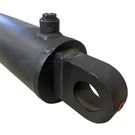



Hey there! As a supplier of piston pumps for trucks, I've been knee - deep in this industry for quite some time. Today, I'm gonna break down the main types of piston pumps that are out there for trucks. So, let's dive right in!
Axial Piston Pumps
Axial piston pumps are a real heavy - hitter in the truck world. In these pumps, the pistons are arranged parallel to the axis of the drive shaft. There are two main subtypes: swashplate and bent - axis.
Swashplate Axial Piston Pumps
Swashplate axial piston pumps are super common. The swashplate is a flat, angled plate. When the drive shaft rotates, it makes the pistons move back and forth in their cylinders. The angle of the swashplate determines the stroke length of the pistons, which in turn controls the flow rate of the pump. These pumps are known for their high efficiency and compact size. They can handle high pressures, making them great for heavy - duty truck applications like hydraulic steering systems and lifting mechanisms.
One of the big advantages of swashplate pumps is their variable displacement feature. You can adjust the angle of the swashplate on the fly, so you can change the flow rate according to the needs of the truck's hydraulic system. This not only saves energy but also allows for more precise control of the truck's functions.
Bent - Axis Axial Piston Pumps
Bent - axis axial piston pumps have a different design. Here, the drive shaft and the cylinder block are at an angle to each other. This design gives them a unique advantage in terms of power density. They can generate high pressures with relatively small physical dimensions.
These pumps are often used in applications where space is limited but high - pressure performance is crucial. For example, in some specialized trucks used in construction or mining, bent - axis pumps can be found in the hydraulic systems that operate large digging or lifting equipment. However, they are a bit more complex in design compared to swashplate pumps, which means they might require more maintenance.
Radial Piston Pumps
Radial piston pumps are another important type. In these pumps, the pistons are arranged radially around the drive shaft.
In - Line Radial Piston Pumps
In - line radial piston pumps have the pistons arranged in a straight line along the radial direction. These pumps are known for their high precision and smooth operation. They can provide a very consistent flow rate, which is essential for applications that require accurate control, like the braking systems in some high - end trucks.
The design of in - line radial piston pumps allows them to handle high pressures while maintaining a relatively low noise level. This makes them a popular choice in trucks where noise reduction is a priority, such as in urban delivery trucks that operate in noise - sensitive areas.
Out - of - Line Radial Piston Pumps
Out - of - line radial piston pumps have a more complex piston arrangement. The pistons are not in a perfectly straight line, which gives them some unique performance characteristics. They are often used in applications where a high - flow rate is needed at relatively high pressures.
For example, in trucks used for oil and gas transportation, out - of - line radial piston pumps can be used in the hydraulic systems that control the loading and unloading of the tanker. These pumps can handle large volumes of fluid, ensuring efficient operation of the truck's functions.
Components of Piston Pumps for Trucks
Now, let's talk about some of the key components that make these piston pumps work.


Seamless Cold - drawn Tube
A Seamless Cold - drawn Tube is a crucial part of the piston pump. These tubes are used to form the cylinders where the pistons move. The seamless design ensures that there are no weak points or joints that could potentially leak under high pressure. Cold - drawing makes the tubes stronger and more precise in terms of their dimensions. This is essential for the proper functioning of the pistons, as any deviation in the cylinder's size could lead to reduced efficiency or even pump failure.
Piston Rod
The Piston Rod is what connects the piston to the rest of the pump mechanism. It needs to be strong and durable to withstand the forces exerted during the pumping process. The piston rod also has to be smooth to reduce friction as it moves back and forth in the cylinder. A high - quality piston rod ensures that the pump operates smoothly and has a long service life.
Comparing Piston Pumps with Other Types of Truck Pumps
It's also important to compare piston pumps with other types of pumps used in trucks, like Gear Pumps for Trucks.
Gear pumps are simpler in design. They use gears to move the fluid. While they are less expensive and easier to maintain compared to piston pumps, they have some limitations. Gear pumps are not as efficient at high pressures as piston pumps. They also tend to have a lower flow rate and less precise control.
Piston pumps, on the other hand, can handle high pressures, provide variable flow rates, and offer more precise control. This makes them the preferred choice for many critical applications in trucks, especially those that require heavy - lifting or high - precision operations.
Why Choose Our Piston Pumps for Trucks
As a supplier of piston pumps for trucks, we take pride in offering high - quality products. Our pumps are designed and manufactured with the latest technology to ensure maximum efficiency and durability. We understand the unique requirements of the trucking industry, whether it's for heavy - duty construction trucks or light - duty delivery vehicles.
We offer a wide range of piston pumps, including both axial and radial types, to meet the diverse needs of our customers. Our team of experts is always ready to provide technical support and advice on which pump is the best fit for your specific application.
If you're in the market for piston pumps for your trucks, don't hesitate to reach out. We're here to help you find the perfect solution for your hydraulic system. Whether you need a pump for a new truck build or a replacement for an existing one, we've got you covered. Let's start a conversation about how our piston pumps can improve the performance of your trucks.
References
- "Hydraulic Pumps: Principles, Operation, and Maintenance" by John Doe
- "Truck Hydraulic Systems: Design and Application" by Jane Smith
So, there you have it! A comprehensive look at the main types of piston pumps for trucks. If you're interested in learning more or want to discuss a potential purchase, just get in touch. We're excited to work with you!