




Hey there! I'm a supplier of telescopic cylinders, and I often get asked about all sorts of technical details. One question that pops up a lot is about the cylindricity tolerance of a telescopic cylinder. So, let's dig into it.


First off, what the heck is cylindricity tolerance? Well, it's all about how close the actual shape of the inner or outer surface of the telescopic cylinder is to a perfect cylinder. A perfect cylinder is this ideal shape where every cross - section through the cylinder is a perfect circle, and the axis of the cylinder is straight. But in the real world, it's impossible to make a cylinder that's 100% perfect. That's where cylindricity tolerance comes in.
Cylindricity tolerance is basically a range within which the actual shape of the cylinder surface can vary while still being considered acceptable for the intended use. It takes into account three main types of deviations: roundness, straightness of the axis, and taper.
Roundness refers to how close the cross - sectional shape of the cylinder is to a perfect circle. If the cross - section is more like an oval or some other irregular shape, it affects the roundness and, in turn, the overall cylindricity.
The straightness of the axis is another crucial factor. If the center axis of the telescopic cylinder isn't straight, the cylinder might not move smoothly when it's extended or retracted. This can lead to all sorts of problems, like increased wear and tear on the seals and other components, and it can even affect the performance of the entire system that the cylinder is a part of.
Taper is when the diameter of the cylinder changes along its length. A little bit of taper might be okay, but if it's outside the acceptable cylindricity tolerance, it can cause issues with the fit of the piston inside the cylinder and can also impact the hydraulic efficiency.
Now, why does cylindricity tolerance matter so much for telescopic cylinders? Well, telescopic cylinders are used in a wide range of applications, from construction equipment like dump trucks and forklifts to industrial machinery. In these applications, the smooth operation of the cylinder is crucial.
For example, in a dump truck, the telescopic cylinder is responsible for raising and lowering the dump body. If the cylindricity tolerance is off, the cylinder might bind or stick during operation. This can make it difficult to control the movement of the dump body, and it can also lead to premature failure of the cylinder.
In industrial machinery, the precision of the telescopic cylinder's movement is often important for accurate positioning or for applying a consistent force. If the cylinder doesn't have a proper cylindricity tolerance, the machinery might not work as intended, leading to errors in the production process and potentially causing damage to the products being manufactured.
As a supplier, we pay a lot of attention to the cylindricity tolerance of our telescopic cylinders. We use advanced manufacturing techniques and precision machining to ensure that the cylinders we produce meet the required standards. We also have strict quality control measures in place to check the cylindricity of each cylinder before it leaves our factory.
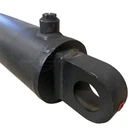
When it comes to our products, we've got a great range of telescopic cylinders. You can check out our Pin Mount Telescopic Cylinders. These are designed for applications where you need a reliable and easy - to - mount cylinder. The pin - mount design allows for quick and easy installation, and our strict control of cylindricity tolerance ensures smooth operation.
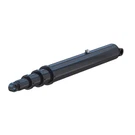
Another product in our lineup is the FE 169 - 5 - 5405 Telescopic Hydraulic Cylinders. These are high - performance cylinders that are built to last. With their unique design and excellent cylindricity control, they can handle the toughest jobs in construction and industrial applications.
And if you're looking for something a bit different, we also offer Single Acting Telescopic Cylinders. These cylinders are designed to operate in a single direction, and they're often used in applications where space is limited or where a simple design is preferred. Once again, maintaining the right cylindricity tolerance is key to their performance.
So, how do we measure the cylindricity tolerance? There are a few different methods. One common way is to use a coordinate measuring machine (CMM). A CMM is a highly accurate device that can measure the dimensions and shape of an object in three - dimensional space. By using a CMM, we can get very precise measurements of the cylinder's surface and determine if it falls within the acceptable cylindricity tolerance.
Another method is to use a roundness tester. This device is specifically designed to measure the roundness of a cylinder's cross - section. It can provide detailed information about the shape deviations, which are an important part of the overall cylindricity assessment.
In conclusion, the cylindricity tolerance of a telescopic cylinder is a critical factor that can greatly affect its performance and durability. As a supplier, we're committed to producing high - quality telescopic cylinders with the right cylindricity tolerance to meet the needs of our customers.
If you're in the market for telescopic cylinders, whether it's for a new project or to replace an existing one, we'd love to talk to you. We can provide you with more information about our products and help you choose the right cylinder for your specific application. Don't hesitate to reach out and start the conversation about your procurement needs.
References
- "Mechanical Engineering Design Handbook", various authors, multiple editions.
- "Hydraulic Cylinder Technology", industry - specific publication.