




Hey there! As a piston rod supplier, I've been in the industry for quite some time, and I often get asked about the relationship between piston rod surface hardness and wear resistance. So, I thought I'd share my insights on this topic in today's blog.
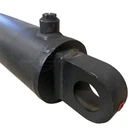
First off, let's talk about what piston rods are and why they're important. Piston rods are a crucial component in hydraulic systems, used in a wide range of applications, from construction equipment to industrial machinery. They're responsible for transferring the force generated by the hydraulic fluid to the piston, which then moves the load. Given their critical role, it's essential that piston rods are durable and can withstand the wear and tear of regular use.
Now, let's dive into the main topic: the impact of piston rod surface hardness on wear resistance. Surface hardness refers to the ability of a material's surface to resist indentation, scratching, and abrasion. In the context of piston rods, a harder surface means better resistance to wear.
When a piston rod has a high surface hardness, it can better withstand the friction and abrasion that occur during operation. This is because a harder surface is less likely to deform or wear away when in contact with other components, such as seals or cylinder walls. As a result, the piston rod can maintain its shape and dimensions over time, ensuring optimal performance and longevity of the hydraulic system.
On the other hand, a piston rod with a low surface hardness is more prone to wear and damage. The softer surface can easily be scratched or abraded, leading to increased friction and leakage in the hydraulic system. This not only reduces the efficiency of the system but also increases the risk of component failure and costly repairs.


So, how do we achieve the right surface hardness for piston rods? There are several methods available, including heat treatment, surface coating, and nitriding.
Heat treatment is a common method used to increase the surface hardness of piston rods. By heating the rod to a specific temperature and then cooling it rapidly, the material's structure is altered, resulting in a harder surface. This process can significantly improve the wear resistance of the piston rod, but it requires careful control of the heating and cooling parameters to ensure consistent results.
Surface coating is another effective way to enhance the surface hardness of piston rods. Coatings such as chrome plating or ceramic coatings can provide a hard, wear-resistant layer on the surface of the rod. These coatings not only improve the wear resistance but also offer additional benefits, such as corrosion resistance and reduced friction.
Nitriding is a specialized heat treatment process that involves diffusing nitrogen into the surface of the piston rod. This creates a hard, nitride layer that improves the wear resistance and fatigue strength of the rod. Nitriding is particularly effective for piston rods used in high-stress applications, as it can significantly increase their durability and performance.
At our company, we offer a wide range of piston rods with different surface hardness levels to meet the specific needs of our customers. Whether you're looking for a standard piston rod or a custom-designed solution, we have the expertise and resources to deliver high-quality products that meet your requirements.
In addition to piston rods, we also supply other hydraulic components, such as Gear Pumps for Trucks and SRB Seamless Tube. Our goal is to provide our customers with a one-stop solution for all their hydraulic needs, ensuring that they have access to the best products and services in the industry.
If you're in the market for piston rods or other hydraulic components, I encourage you to contact us to discuss your requirements. Our team of experts is always ready to help you find the right solution for your application and provide you with the support and guidance you need to make an informed decision.
In conclusion, the surface hardness of piston rods plays a crucial role in their wear resistance and overall performance. By choosing a piston rod with the right surface hardness and using appropriate treatment methods, you can ensure that your hydraulic system operates efficiently and reliably for years to come.
Thanks for reading! If you have any questions or comments, please feel free to leave them below.
References
- Smith, J. (2020). Hydraulic System Design and Maintenance. New York: McGraw-Hill.
- Jones, R. (2019). Piston Rod Materials and Coatings for Improved Wear Resistance. Journal of Hydraulic Engineering, 45(2), 123-135.
- Brown, S. (2018). Heat Treatment of Piston Rods: A Review. International Journal of Materials Science, 32(4), 567-578.