

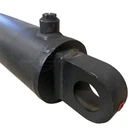



The relationship between the stroke length and the lifting height of a dump cylinder is a crucial aspect to understand for anyone involved in the field of heavy - duty equipment, especially when dealing with dump trucks and related machinery. As a supplier of dump cylinders, I have witnessed firsthand the importance of this relationship in ensuring the optimal performance of the equipment.
Understanding the Basics of a Dump Cylinder
A dump cylinder is a hydraulic cylinder that is used to lift the bed of a dump truck, allowing the contents to be unloaded. It operates based on the principles of hydraulics, where the pressure of a fluid (usually oil) is used to generate a force that moves a piston within the cylinder. The movement of the piston is directly related to the stroke length of the cylinder.
The stroke length of a dump cylinder refers to the distance that the piston can travel within the cylinder. It is measured from the fully retracted position to the fully extended position of the piston. On the other hand, the lifting height is the vertical distance that the dump truck bed is raised when the dump cylinder is fully extended.
The Direct Relationship
In a well - designed dump truck system, there is a direct and proportional relationship between the stroke length of the dump cylinder and the lifting height of the dump truck bed. This relationship is primarily determined by the mechanical design of the dump truck, specifically the linkage system that connects the dump cylinder to the truck bed.
Let's assume a simple scenario where the dump cylinder is directly attached to the truck bed at a fixed angle. In this case, the lifting height (h) can be approximated using the formula (h = L\times\sin\theta), where (L) is the stroke length of the cylinder and (\theta) is the angle between the axis of the cylinder and the horizontal plane when the cylinder is extended.
However, in real - world applications, the relationship is often more complex. Most dump trucks have a multi - link mechanism that amplifies or modifies the motion of the cylinder to achieve the desired lifting height. This mechanism can be designed to provide a greater lifting height for a given stroke length, or to optimize the force distribution during the lifting process.
Importance of the Relationship in Design and Performance
Design Considerations
When designing a dump truck, engineers need to carefully consider the relationship between the stroke length and the lifting height. They must ensure that the cylinder's stroke length is sufficient to achieve the required lifting height for the specific application. For example, if a dump truck is used to unload heavy materials at a high - sided storage facility, a greater lifting height may be required. In such cases, a longer stroke length cylinder may be necessary, or the linkage system may need to be redesigned to maximize the lifting height.
Performance and Efficiency
The relationship between the stroke length and the lifting height also has a significant impact on the performance and efficiency of the dump truck. A well - matched cylinder and linkage system can ensure smooth and efficient lifting operations. If the stroke length is too short for the desired lifting height, the truck may not be able to fully unload its contents, leading to material spillage and reduced productivity. On the other hand, if the stroke length is too long, it may result in unnecessary energy consumption and increased wear and tear on the cylinder and other components.
Factors Affecting the Relationship
Cylinder Design
The design of the dump cylinder itself can affect the relationship between the stroke length and the lifting height. For example, the internal diameter of the cylinder, the type of seals used, and the quality of the piston rod can all influence the cylinder's performance. A cylinder with a larger internal diameter can generate more force, but it may also require a longer stroke length to achieve the same lifting height compared to a cylinder with a smaller diameter.
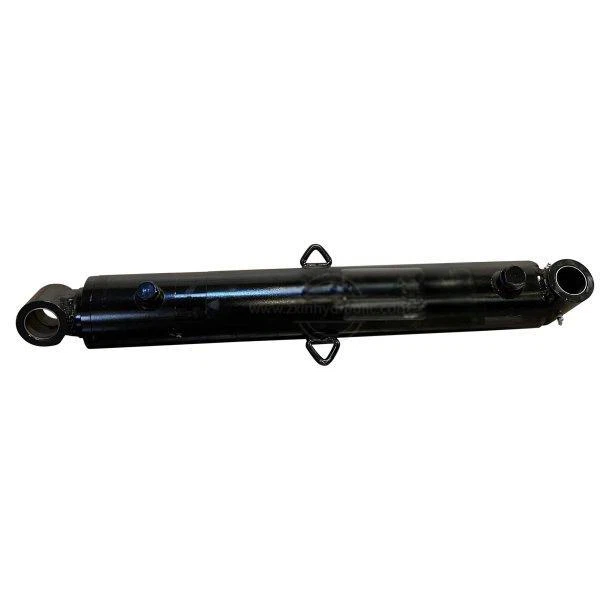

Linkage System
As mentioned earlier, the linkage system plays a crucial role in determining the relationship between the stroke length and the lifting height. Different types of linkage systems, such as four - bar linkages or scissor mechanisms, can be used to achieve different lifting characteristics. The design of the linkage system can affect the mechanical advantage, the range of motion, and the stability of the lifting operation.
Load and Operating Conditions
The load being carried by the dump truck and the operating conditions also have an impact on the relationship between the stroke length and the lifting height. A heavier load may require a greater force to lift, which can affect the performance of the cylinder and the linkage system. Additionally, factors such as the terrain, the angle of the truck when parked, and the temperature can all influence the operation of the dump cylinder and the resulting lifting height.
Our Offerings as a Dump Cylinder Supplier
As a leading supplier of dump cylinders, we understand the importance of the relationship between the stroke length and the lifting height. We offer a wide range of dump cylinders with different stroke lengths to meet the diverse needs of our customers. Our engineers work closely with customers to understand their specific requirements and design customized solutions that optimize the performance of their dump trucks.
In addition to dump cylinders, we also supply other types of hydraulic cylinders for garbage trucks, such as Compactor Cylinders, Tailgate Lift Cylinder, and Packer Cylinder. These cylinders are designed to provide reliable and efficient operation in harsh environments.
Contact Us for Your Dump Cylinder Needs
If you are in the market for high - quality dump cylinders or other hydraulic cylinders for your heavy - duty equipment, we invite you to contact us. Our team of experts is ready to assist you in selecting the right products for your specific application. Whether you need a standard cylinder or a custom - designed solution, we have the experience and expertise to meet your needs.
References
- "Hydraulic Cylinder Design Handbook" by John F. Watson.
- "Heavy - Duty Truck Systems" by Frank D. Gillette.
- Technical papers on dump truck design and hydraulic system optimization from industry conferences.