




In the realm of waste management and industrial equipment, compactor cylinders play a crucial role. These cylinders are the workhorses that enable garbage trucks and other compaction machines to effectively compress waste materials. At the heart of these compactor cylinders lies a seemingly simple yet incredibly vital component: the piston. In this blog, we will delve into the role of the piston in compactor cylinders, exploring its functions, significance, and the impact it has on the overall performance of the cylinders. As a trusted Compactor Cylinders supplier, we have witnessed firsthand the critical role that pistons play in ensuring the smooth and efficient operation of these essential components.
Basic Structure and Function of Compactor Cylinders
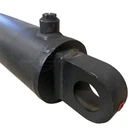
Before we dive into the specifics of the piston's role, let's first understand the basic structure and function of compactor cylinders. Compactor cylinders are hydraulic cylinders that are designed to generate a large amount of force for compressing waste materials. They typically consist of a cylinder barrel, a piston, a piston rod, seals, and end caps. The cylinder barrel is a hollow tube that houses the piston and provides the chamber for hydraulic fluid to act upon. The piston is a disc-shaped component that fits snugly inside the cylinder barrel and divides it into two chambers: the rod-end chamber and the cap-end chamber. The piston rod is connected to the piston and extends out of one end of the cylinder barrel. Seals are used to prevent the leakage of hydraulic fluid between the different chambers and components of the cylinder.
The basic function of a compactor cylinder is to convert hydraulic energy into mechanical force. When hydraulic fluid is pumped into one of the chambers of the cylinder, it pushes against the piston, causing it to move in a linear direction. This movement of the piston is transferred to the piston rod, which then exerts a force on the waste materials being compacted. By controlling the flow of hydraulic fluid into and out of the different chambers of the cylinder, the compaction process can be precisely regulated.
The Role of the Piston in Compactor Cylinders
The piston serves several key roles in compactor cylinders, each of which is essential for the proper operation and performance of the cylinder.


Force Generation
One of the primary roles of the piston is to generate force. When hydraulic fluid is pressurized in the cap-end chamber of the cylinder, it exerts a force on the piston. According to Pascal's law, the pressure exerted by the hydraulic fluid is transmitted equally in all directions. As a result, the piston experiences a force equivalent to the pressure of the hydraulic fluid multiplied by the area of the piston. This force is then transferred to the piston rod, which can be used to compress waste materials with great power. The size and design of the piston determine the amount of force that can be generated by the cylinder. A larger piston area will result in a greater force output, allowing for more effective compaction of denser waste materials.
Sealing
Another crucial role of the piston is to provide a seal between the rod-end and cap-end chambers of the cylinder. Seals are installed on the piston to prevent the leakage of hydraulic fluid between the two chambers. This is important for maintaining the efficiency of the cylinder and ensuring that the hydraulic energy is effectively converted into mechanical force. If the seals on the piston fail, hydraulic fluid can leak from one chamber to the other, reducing the pressure and force output of the cylinder. Additionally, fluid leakage can contaminate the surrounding environment and cause damage to other components of the system. High-quality seals and proper installation are essential to ensure the long-term sealing performance of the piston.
Direction Control
The piston also plays a role in controlling the direction of movement of the cylinder. By selectively pressurizing either the rod-end or cap-end chamber of the cylinder, the piston can be made to move in either direction. When the rod-end chamber is pressurized, the piston moves towards the cap-end of the cylinder, retracting the piston rod. Conversely, when the cap-end chamber is pressurized, the piston moves towards the rod-end of the cylinder, extending the piston rod. This ability to control the direction of movement of the cylinder is crucial for the compaction process, as it allows the waste materials to be compressed and ejected as needed.
Impact of Piston Design on Compactor Cylinder Performance
The design of the piston can have a significant impact on the performance of compactor cylinders. Several factors related to piston design need to be carefully considered to ensure optimal performance.
Piston Material
The material used to manufacture the piston is an important consideration. Pistons are typically made from materials such as steel, aluminum, or cast iron. Steel pistons are known for their high strength and durability, making them suitable for heavy-duty applications where high forces are required. Aluminum pistons, on the other hand, are lighter in weight and offer better heat dissipation, which can be beneficial in applications where the cylinder operates at high temperatures. Cast iron pistons provide a good balance between strength and cost and are commonly used in medium-duty compactor cylinders.
Piston Shape and Contour
The shape and contour of the piston can also affect the performance of the cylinder. A well-designed piston shape can help to improve the fluid flow within the cylinder, reduce turbulence, and minimize pressure losses. For example, pistons with a tapered or domed shape can help to prevent the formation of air pockets and improve the overall efficiency of the cylinder. Additionally, the contour of the piston can be optimized to ensure proper sealing and minimize wear on the seals.
Piston Coating
Applying a coating to the piston can enhance its performance and durability. Coatings such as chrome plating can provide corrosion resistance, reduce friction, and improve the wear resistance of the piston. This can help to extend the service life of the piston and the overall cylinder, reducing maintenance costs and downtime.
Importance of Piston Maintenance
Proper maintenance of the piston is essential for ensuring the long-term performance and reliability of compactor cylinders. Regular inspection of the piston and its seals can help to identify any signs of wear, damage, or leakage early on. If any issues are detected, the piston or the seals should be replaced promptly to prevent further damage to the cylinder.
In addition to inspection, proper lubrication of the piston is also important. The hydraulic fluid used in the cylinder acts as a lubricant, reducing friction between the piston and the cylinder barrel. However, over time, the hydraulic fluid can break down and lose its lubricating properties. Regularly changing the hydraulic fluid according to the manufacturer's recommendations can help to ensure that the piston is properly lubricated and protected from wear.
Related Cylinder Types in Waste Management
In addition to compactor cylinders, there are other types of hydraulic cylinders used in waste management equipment, such as Tailgate Lift Cylinders and Ejector Cylinders. Tailgate lift cylinders are used to raise and lower the tailgate of a garbage truck, allowing for easy loading and unloading of waste materials. Ejector cylinders are used to push the compacted waste materials out of the truck's storage compartment. These cylinders also rely on pistons to generate force and perform their functions.
Conclusion
In conclusion, the piston plays a vital role in compactor cylinders. It is responsible for generating force, providing a seal, and controlling the direction of movement of the cylinder. The design and material of the piston can have a significant impact on the performance and durability of the cylinder. Proper maintenance of the piston is essential for ensuring the long-term reliability of the compactor cylinder. As a leading Compactor Cylinders supplier, we understand the importance of high-quality pistons in the operation of these cylinders. If you are in the market for compactor cylinders, tailgate lift cylinders, or ejector cylinders, we invite you to contact us for a detailed discussion of your requirements. Our team of experts is ready to assist you in selecting the right cylinders for your specific application and ensuring their optimal performance.
References
- Bosch Rexroth, "Hydraulic Cylinders Technical Guide."
- Parker Hannifin, "Industrial Hydraulic Cylinders Product Catalog."
- Eaton, "Hydraulics Application Manual."