

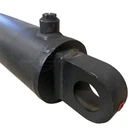



Hey there! As a supplier of Packer Cylinders, I've been getting a lot of questions lately about what modifications are needed for these cylinders to work in a cryogenic environment. So, I thought I'd take a moment to share some insights on this topic.
First off, let's talk about what a cryogenic environment is. Cryogenic temperatures are extremely low, typically below -150°C (-238°F). At these temperatures, materials can become brittle, and the performance of mechanical components can be severely affected. So, when it comes to using a Packer Cylinder in a cryogenic environment, we need to make some specific modifications to ensure its proper functioning.
Material Selection
One of the most critical aspects of modifying a Packer Cylinder for cryogenic use is the selection of materials. At low temperatures, standard materials like carbon steel can become brittle and prone to cracking. That's why we need to use materials that can maintain their ductility and strength in cryogenic conditions.
Stainless steel is a popular choice for cryogenic applications. It has excellent resistance to corrosion and can retain its mechanical properties at low temperatures. Austenitic stainless steels, such as 304 and 316, are particularly well-suited for cryogenic use because they have a face-centered cubic (FCC) crystal structure, which remains ductile even at extremely low temperatures.
Another option is aluminum alloys. Aluminum has a low density and good thermal conductivity, which can be beneficial in cryogenic applications. Some aluminum alloys, like 6061 and 7075, can maintain their strength and ductility at low temperatures, making them suitable for use in Packer Cylinders.
Sealing Systems
The sealing system of a Packer Cylinder is another area that requires special attention in a cryogenic environment. At low temperatures, rubber seals can harden and lose their elasticity, leading to leaks and reduced performance. To address this issue, we need to use seals made from materials that can withstand cryogenic temperatures.
One option is to use seals made from polytetrafluoroethylene (PTFE). PTFE has excellent chemical resistance and can maintain its flexibility at low temperatures. It is also self-lubricating, which can help reduce friction and wear in the sealing system.
Another option is to use seals made from fluorocarbon elastomers, such as Viton. These materials have good resistance to chemicals and can maintain their elasticity at low temperatures. However, they may require special handling and installation procedures to ensure proper performance.
Lubrication
Lubrication is essential for the smooth operation of a Packer Cylinder, especially in a cryogenic environment. At low temperatures, the viscosity of lubricants can increase significantly, which can make it difficult for the cylinder to move smoothly. To address this issue, we need to use lubricants that are specifically designed for cryogenic applications.
One option is to use synthetic lubricants, such as polyalphaolefins (PAOs) or esters. These lubricants have low pour points and can maintain their fluidity at low temperatures. They also have good resistance to oxidation and wear, which can help extend the life of the cylinder.
Another option is to use solid lubricants, such as graphite or molybdenum disulfide. These lubricants can provide excellent lubrication at low temperatures and can help reduce friction and wear in the cylinder. However, they may require special handling and application procedures to ensure proper performance.
Thermal Management
In a cryogenic environment, thermal management is crucial to ensure the proper functioning of a Packer Cylinder. At low temperatures, the cylinder can absorb heat from its surroundings, which can cause the temperature of the cylinder to rise and affect its performance. To address this issue, we need to use thermal insulation materials to reduce heat transfer to the cylinder.
One option is to use foam insulation materials, such as polyurethane or polystyrene. These materials have low thermal conductivity and can provide excellent insulation at low temperatures. They are also lightweight and easy to install, which can make them a convenient choice for cryogenic applications.
Another option is to use vacuum insulation panels (VIPs). These panels consist of a core material enclosed in a vacuum-sealed envelope, which can provide extremely low thermal conductivity. VIPs are more expensive than foam insulation materials, but they can provide better insulation performance and can reduce the size and weight of the insulation system.
Other Considerations
In addition to the modifications mentioned above, there are a few other considerations that we need to keep in mind when using a Packer Cylinder in a cryogenic environment. For example, we need to ensure that the cylinder is properly designed and manufactured to withstand the stresses and pressures associated with cryogenic applications. We also need to perform regular maintenance and inspections to ensure that the cylinder is operating properly and to detect any potential issues before they become major problems.
It's also important to note that the modifications required for a Packer Cylinder to work in a cryogenic environment may vary depending on the specific application and the operating conditions. That's why it's important to work with a supplier who has experience in designing and manufacturing cylinders for cryogenic applications. A knowledgeable supplier can help you select the right materials, sealing systems, lubricants, and thermal management solutions for your specific needs.


Related Products
If you're interested in other types of hydraulic cylinders, we also offer Compactor Cylinders, Ejector Cylinders, and Dump Cylinder. These cylinders are designed for use in garbage trucks and other heavy equipment, and they can provide reliable performance in a variety of applications.
Contact Us
If you have any questions about our Packer Cylinders or if you're interested in learning more about the modifications required for cryogenic applications, please don't hesitate to contact us. We'd be happy to help you find the right solution for your needs.
References
- ASM Handbook, Volume 2: Properties and Selection: Nonferrous Alloys and Special-Purpose Materials. ASM International, 1990.
- Cryogenic Engineering. Third Edition. R. Barron. Oxford University Press, 1985.
- Handbook of Lubrication and Tribology, Volume 1: Applications. B. Bhushan. CRC Press, 2001.