

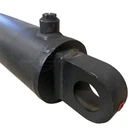



Can ejector cylinders be used in a vacuum environment? This is a question that often arises in various industrial applications, especially when dealing with unique operating conditions. As a supplier of Ejector Cylinders, I've encountered numerous inquiries regarding the compatibility of our products with vacuum environments. In this blog post, we'll explore the technical aspects, potential challenges, and possible solutions related to using ejector cylinders in such conditions.
Understanding Ejector Cylinders
Before delving into the topic of using ejector cylinders in a vacuum environment, it's essential to understand what ejector cylinders are and how they function. Ejector cylinders are a type of hydraulic cylinder commonly used in garbage trucks and other heavy - duty machinery. Their primary function is to eject or push out materials, such as waste from a garbage truck's storage compartment. These cylinders are designed to generate significant force, enabling them to handle large volumes of material efficiently.
The basic structure of an ejector cylinder consists of a piston, a rod, and a cylinder barrel. Hydraulic fluid is pumped into one side of the piston, creating pressure that moves the piston and the attached rod. This movement is then used to perform the ejection task. The design and construction of ejector cylinders are optimized for high - pressure and high - force applications, which makes them reliable workhorses in many industrial settings.
Vacuum Environment Characteristics
A vacuum environment is defined by a space where the pressure is significantly lower than the atmospheric pressure. In a perfect vacuum, there is an absence of matter, but in practical applications, a vacuum is typically a space with a reduced number of gas molecules. The low - pressure conditions in a vacuum environment can have several effects on mechanical components, including ejector cylinders.
One of the most significant challenges in a vacuum environment is the potential for outgassing. Outgassing occurs when volatile substances within a material vaporize and are released into the vacuum. This can be a problem for ejector cylinders because the outgassed substances can contaminate the vacuum chamber and potentially damage other sensitive equipment. Additionally, the lack of air in a vacuum can affect the lubrication properties of the hydraulic fluid used in the cylinder. Lubrication is crucial for the smooth operation of the piston and rod, and any changes in lubrication can lead to increased friction, wear, and reduced efficiency.
Technical Considerations for Using Ejector Cylinders in a Vacuum
Material Selection
When using ejector cylinders in a vacuum environment, the choice of materials is of utmost importance. The materials used in the construction of the cylinder must have low outgassing rates to prevent contamination. For example, the seals in the ejector cylinder need to be made from materials that are resistant to outgassing, such as certain types of rubber or synthetic polymers specifically designed for vacuum applications.
The cylinder barrel and piston rod should also be made from materials that are compatible with the vacuum environment. Stainless steel is a popular choice because it has good corrosion resistance and relatively low outgassing properties. Additionally, the surface finish of these components can affect outgassing. A smooth surface finish can reduce the amount of trapped gas and minimize outgassing.
Lubrication
As mentioned earlier, lubrication is a critical factor in the operation of ejector cylinders. In a vacuum environment, traditional lubricants may not be suitable due to their high volatility. Specialized vacuum - compatible lubricants are required. These lubricants are designed to have low vapor pressures, which means they are less likely to evaporate in a vacuum. They also need to provide sufficient lubrication to reduce friction and wear between the moving parts of the cylinder.
Sealing
Sealing is another crucial aspect when using ejector cylinders in a vacuum environment. The seals need to prevent the leakage of hydraulic fluid into the vacuum chamber and also prevent the ingress of contaminants from the vacuum into the cylinder. High - quality seals with good vacuum - sealing properties are essential. These seals need to be able to maintain their integrity under the low - pressure conditions and the forces exerted during the operation of the cylinder.


Potential Solutions for Using Ejector Cylinders in a Vacuum
Modifying Existing Designs
One approach to using ejector cylinders in a vacuum environment is to modify the existing designs. This can involve using different materials for the seals, piston, and rod, as well as changing the lubrication system. For example, the hydraulic fluid can be replaced with a vacuum - compatible fluid, and the seals can be upgraded to ones with better outgassing resistance.
Custom - Built Ejector Cylinders
In some cases, it may be necessary to build custom - designed ejector cylinders specifically for vacuum applications. Custom - built cylinders can be optimized for the unique requirements of the vacuum environment, such as low outgassing, proper lubrication, and effective sealing. This approach allows for a more precise fit with the application and can improve the overall performance and reliability of the cylinder.
Applications and Case Studies
Although ejector cylinders are not commonly associated with vacuum environments, there are some niche applications where they can be used. For example, in certain space - related industries, ejector cylinders may be used in the deployment of equipment or the ejection of waste in spacecraft. These applications require cylinders that can operate reliably in the extreme vacuum conditions of space.
In a case study, a research facility was developing a new experiment that required the use of an ejector cylinder in a vacuum chamber. The standard ejector cylinder initially used had issues with outgassing, which contaminated the vacuum chamber. After consulting with our team, the facility decided to use a custom - built ejector cylinder with low - outgassing materials and a specialized lubrication system. The new cylinder was able to operate smoothly in the vacuum environment, and the experiment was a success.
Other Related Cylinders and Their Vacuum Compatibility
While we focus on ejector cylinders, it's also worth mentioning other related cylinders, such as Dump Cylinder and Compactor Cylinders. Dump cylinders are used to lift and dump materials, while compactor cylinders are used to compress waste. Similar to ejector cylinders, these cylinders also face challenges when used in a vacuum environment.
The same principles of material selection, lubrication, and sealing apply to dump cylinders and compactor cylinders. However, the specific design and operating requirements of each type of cylinder may result in different levels of difficulty in adapting them to a vacuum environment. For example, compactor cylinders, which are often used in high - force compression applications, may require more robust sealing and lubrication solutions to operate effectively in a vacuum.
Conclusion and Call to Action
In conclusion, while using ejector cylinders in a vacuum environment presents several challenges, it is possible with the right design, materials, and engineering solutions. As a supplier of ejector cylinders, we have the expertise and experience to help you overcome these challenges. Whether you need a modified existing design or a custom - built cylinder, we can provide you with the best solutions for your specific application.
If you are considering using ejector cylinders, dump cylinders, or compactor cylinders in a vacuum environment, we encourage you to contact us for a consultation. Our team of experts can work with you to understand your requirements and develop a solution that meets your needs. Let's work together to ensure the reliable and efficient operation of your equipment in even the most challenging environments.
References
- ASME Boiler and Pressure Vessel Code, Section VIII, Division 1.
- Vacuum Technology Handbook, edited by David O'Hanlon.
- Hydraulic Cylinder Design and Application Guide, published by the National Fluid Power Association.