

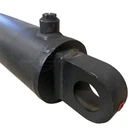



Hey there! As a supplier in the hydraulic system business, I've seen all sorts of hydraulic valves in action. In this blog, I'm gonna break down the common types of hydraulic valves that you might come across. So, let's dive right in!
Directional Control Valves
Directional control valves are like the traffic cops of a hydraulic system. They decide where the fluid goes and in which direction. There are a few different kinds.
Spool Valves
Spool valves are super common. They've got a spool inside a housing, and when you move the spool, it changes the flow path of the hydraulic fluid. You can have different positions for the spool, like 2 - way, 3 - way, or 4 - way. A 2 - way spool valve is pretty simple; it either lets the fluid flow or stops it. A 3 - way valve can direct the fluid to two different paths or block it. And a 4 - way valve is often used in applications where you need to control the movement of a hydraulic cylinder in both directions. For example, in a forklift, a 4 - way spool valve helps the forks go up and down.
Check Valves
Check valves are like one - way streets for hydraulic fluid. They allow the fluid to flow in only one direction. If there's an attempt to make the fluid flow in the opposite direction, the valve closes up tight. These are really useful in preventing backflow in a hydraulic system. Say you've got a pump that's supplying fluid to a cylinder. A check valve can make sure that the fluid doesn't flow back to the pump when the pressure on the cylinder side gets high.
Pressure Control Valves
Pressure control valves are all about keeping the pressure in a hydraulic system in check. Too much pressure can damage components, and too little pressure means the system won't work properly.


Relief Valves
Relief valves are like safety valves. They're set to open at a certain pressure. When the pressure in the system goes above that set value, the relief valve opens up and lets some of the fluid flow back to the reservoir. This prevents the pressure from getting too high and causing damage. For instance, in a Piston Pumps for Trucks, a relief valve is crucial to protect the pump and other components from over - pressurization.
Pressure - Reducing Valves
Pressure - reducing valves are used when you need to have a lower pressure in a part of the hydraulic system. They take the high - pressure fluid from the main system and reduce its pressure to a set value for a specific circuit. Imagine you've got a hydraulic system with different components that require different pressures. A pressure - reducing valve can make sure that each component gets the right amount of pressure.
Flow Control Valves
Flow control valves are used to regulate the flow rate of the hydraulic fluid. This is important because the speed of hydraulic actuators, like cylinders and motors, depends on the flow rate of the fluid.
Throttle Valves
Throttle valves work by changing the size of the opening through which the fluid flows. By adjusting the opening, you can control the flow rate. If you make the opening smaller, the flow rate decreases, and the actuator moves more slowly. If you open it up, the flow rate increases, and the actuator moves faster. Throttle valves are often used in applications where you need to control the speed of a hydraulic cylinder, like in a machine tool where precise speed control is required.
Flow - Dividing Valves
Flow - dividing valves are used when you need to split the flow of hydraulic fluid into two or more paths with a specific flow ratio. For example, in a hydraulic system with multiple cylinders that need to move at the same time but with different speeds, a flow - dividing valve can divide the fluid flow in the right proportion to each cylinder.
Proportional Valves
Proportional valves are a bit more advanced. They allow for a proportional control of pressure, flow, or direction based on an input signal. Instead of just being in an on - off state like some other valves, proportional valves can vary their output continuously. This makes them great for applications that require precise control, like in industrial automation. For example, in a robotic arm that uses hydraulic actuators, proportional valves can provide the precise control needed for smooth and accurate movements.
Servo Valves
Servo valves are even more precise than proportional valves. They can provide extremely accurate control of pressure, flow, or direction. Servo valves use a feedback mechanism to continuously adjust their output based on the actual position, speed, or force of the hydraulic actuator. They're commonly used in high - precision applications, such as aerospace and military equipment.
Cartridge Valves
Cartridge valves are modular valves that are designed to be inserted into a manifold block. They're really compact and can be easily replaced or modified. Cartridge valves can be used for different functions, like directional control, pressure control, or flow control. They're often used in applications where space is limited and a high - density valve arrangement is required, such as in mobile hydraulic equipment.
Pilot - Operated Valves
Pilot - operated valves use a small amount of hydraulic pressure, called the pilot pressure, to control the opening and closing of the main valve. This allows for the control of large - flow or high - pressure valves with a relatively small control signal. Pilot - operated check valves, for example, can be used to hold a hydraulic cylinder in position under high loads. The pilot pressure can be used to release the check valve when it's time to move the cylinder.
In conclusion, understanding the different types of hydraulic valves is crucial for anyone working with hydraulic systems. Whether you're designing a new system, maintaining an existing one, or just looking to upgrade, knowing which valve to use in which situation can make a big difference.
If you're in the market for hydraulic valves or other hydraulic system components like Seamless Cold - drawn Tube and Piston Rod, don't hesitate to reach out. We're here to help you find the right solutions for your needs. Whether it's a small - scale project or a large - scale industrial application, we've got the expertise and the products to support you. Let's have a chat about your requirements and see how we can work together to get your hydraulic system up and running at its best.
References
- Hydraulic System Handbook
- Fluid Power Technology textbooks
- Industry - specific manuals on hydraulic valves and systems